
Why Your Oven Gets Dirty Faster Than You Think
Most people assume their oven only needs a proper clean once it looks bad. The truth is, by the time you can visibly see the buildup coating the walls and ceiling of the oven cavity, the grease and carbon deposits have already been there for a while — and they’ve already been affecting the way your oven performs.
Every time you roast a tray of vegetables, cook a chicken, or bake something that bubbles over the edge of a dish, fat and moisture get released into the oven cavity as vapour. That vapour travels upward and sideways, settling on every internal surface — the walls, the ceiling, the door, the racks, and the fan housing at the back. Heat bakes it on. Then next time you cook, the same thing happens on top of the layer that’s already there.
It compounds quickly. And here’s the part that catches most people off guard — once grease carbonises and bakes hard onto the oven walls, standard supermarket sprays don’t have the chemistry to break it down properly. You might loosen the surface layer, but the dense, carbon-hardened deposits underneath? They’re staying put.
Newcastle families who cook regularly through winter — and that’s most households across suburbs like New Lambton, Jesmond, and Kotara — can go from a reasonably clean oven to a heavily soiled one in a matter of months. It’s not a hygiene failure. It’s just what happens when an oven is actually being used the way it’s supposed to be.

What a Professional Oven Clean Actually Covers
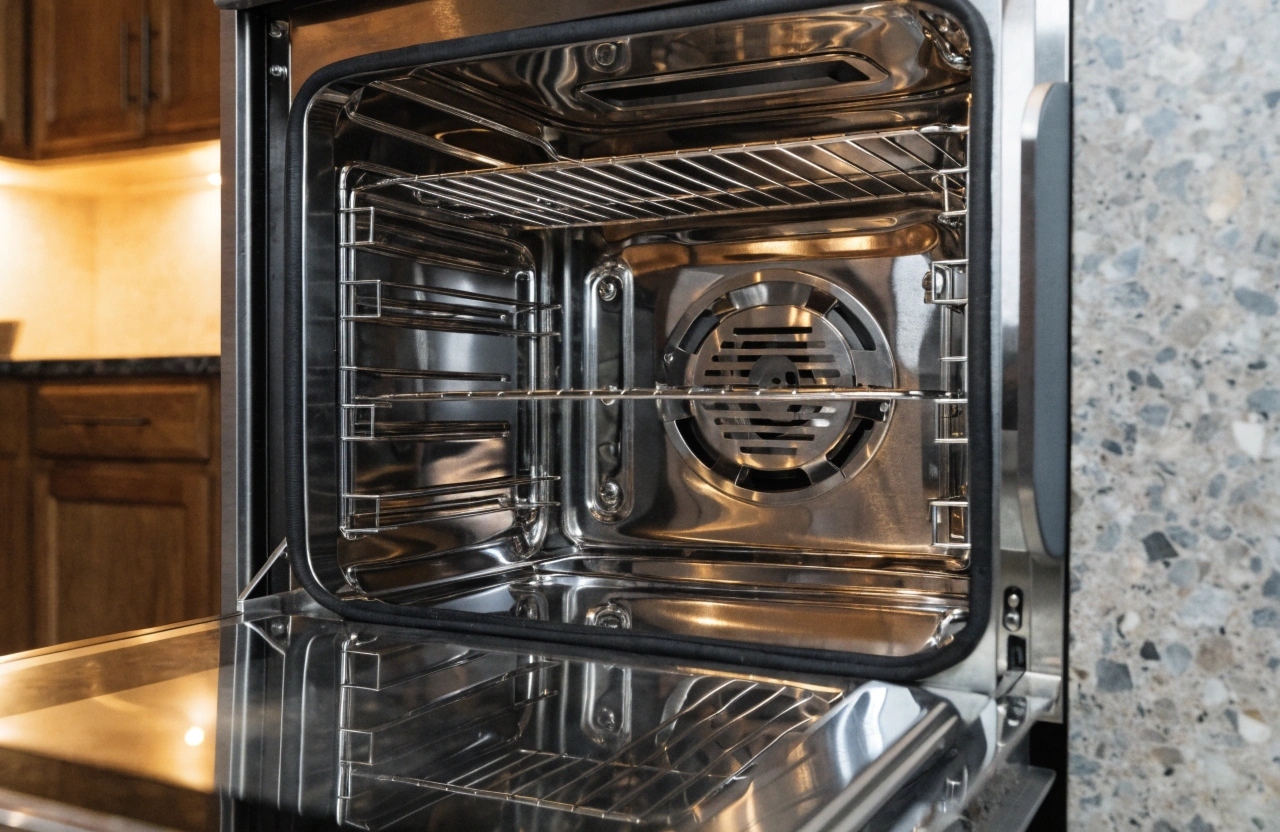
This is where professional oven cleaning is genuinely different from anything you can do with a spray bottle and a scouring pad. A thorough professional clean doesn’t just wipe down the surfaces you can see — it addresses every internal component that accumulates grease, carbon, and burnt-on residue over time.
Here’s what gets covered in a professional oven clean:
• Oven cavity walls, ceiling and floor — the main surfaces where grease vapour settles and carbonises with repeated use
• Oven door glass — inside and out, including between the glass panels where grease seeps in and becomes trapped
• Wire racks and tray runners — soaked and treated separately to remove baked-on residue that builds up with every cook
• Grill element and surround — carefully cleaned without damaging the element itself
• Fan housing and fan blades — critical in fan-forced ovens where grease buildup directly disrupts airflow and heat distribution
• Door seal — cleaned carefully to remove grease and food debris without damaging the rubber, which is what keeps heat locked inside the cavity
Every one of these components plays a role in how your oven actually performs. When they’re coated in months — or years — worth of built-up grease and carbon, the oven is working against itself every single time you switch it on.
A professional clean addresses the whole system, not just the parts that are easy to reach. That’s what makes the result so noticeably different from a DIY attempt.
How a Dirty Oven Affects Your Cooking Performance
A heavily soiled oven doesn’t just look bad — it genuinely stops working the way it should. And most people don’t realise the connection between the buildup inside their oven and the cooking results they’re getting, because the decline happens gradually enough that it’s easy to miss.
Here’s what’s actually happening inside a grease-coated oven:
Uneven heat distribution Carbon deposits on the oven walls and ceiling act as insulation, blocking radiant heat from circulating evenly through the cavity. The result is hot spots and cool spots — food that browns too fast on one side, stays undercooked on the other, or never quite cooks evenly no matter how many times you rotate the tray.
Longer preheat times When the internal surfaces are coated in baked-on residue, the oven takes longer to reach the set temperature and struggles to hold it consistently. You might be waiting significantly longer than you used to before the oven is actually ready to cook.
Smoke during cooking This is the one most Newcastle home cooks notice first. That thin haze of smoke that appears when the oven heats up — and the smell that goes with it — is old grease and carbon deposits burning off every single time the oven runs. It’s not harmless background noise. It’s a sign the buildup has reached a point where it’s actively combusting during normal use.
For families cooking through Newcastle’s cooler months, these performance issues add up fast. A clean oven simply cooks better — more evenly, more efficiently, and without filling the kitchen with smoke.
The Health Risks of a Heavily Soiled Oven
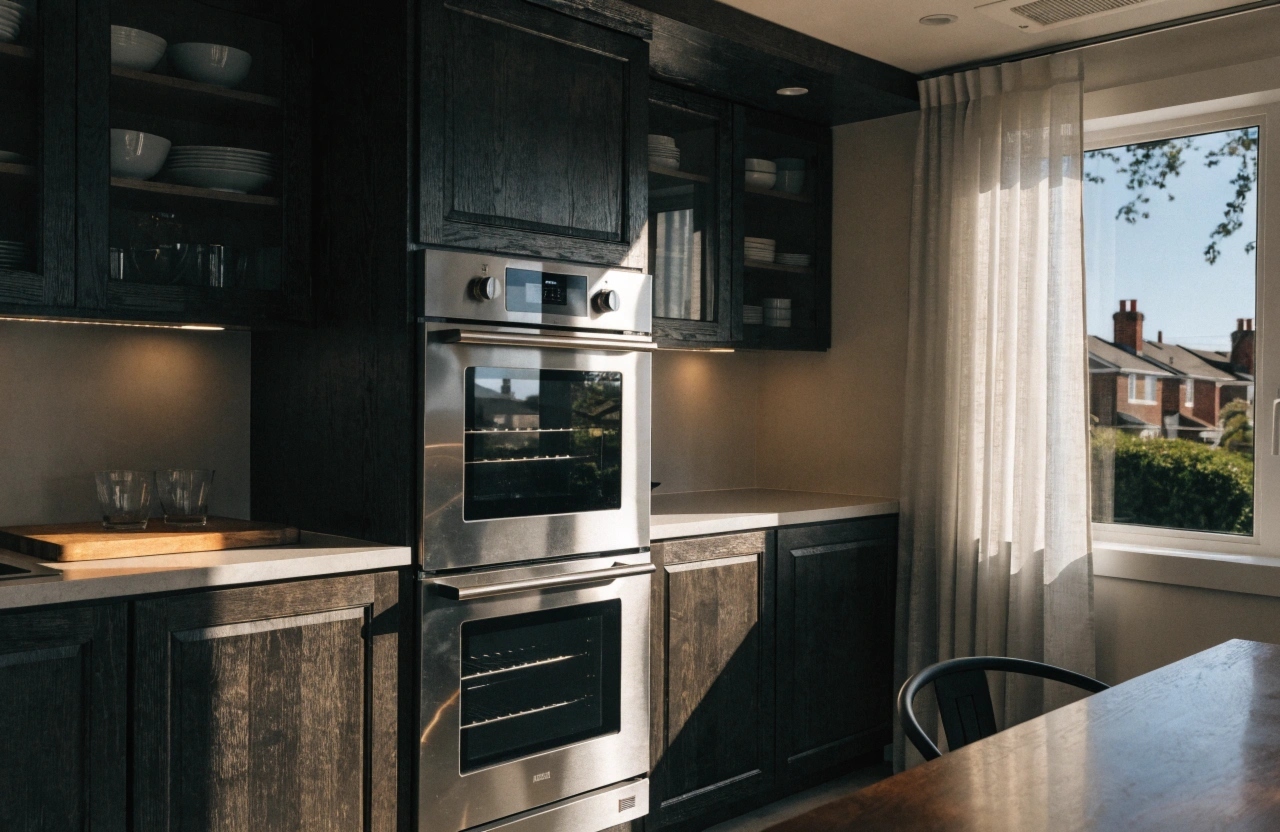
Performance issues are frustrating. But the health side of a dirty oven is something that doesn’t get talked about nearly enough — and for families with kids cooking regular meals at home, it’s worth understanding what’s actually happening inside that cavity every time the oven runs.
When grease and carbon deposits reach a significant level of buildup, two things happen during cooking that directly affect the food on your table.
Smoke and combustion byproducts Every time old grease burns off during cooking, it produces smoke that circulates through the oven cavity — the same cavity your food is sitting in. That smoke carries combustion byproducts that settle on whatever is cooking inside. It’s not dramatic, but it’s consistent, and it’s happening every single meal.
Carbon particles and grease residue transferring to food Heavily carbonised deposits on oven walls and the ceiling can flake and dislodge during cooking, particularly when the oven is running at high temperatures. Those particles don’t stay on the walls. They go somewhere — and in a sealed oven cavity, that somewhere is often onto the food below.
For households across suburbs like Charlestown and New Lambton where the oven gets a genuine workout through the week — school night dinners, weekend roasts, batch cooking — this isn’t a theoretical concern. It’s an ongoing exposure that a professional clean eliminates completely.
A properly cleaned oven isn’t just more pleasant to cook in. It’s a genuinely healthier cooking environment for your whole family. That alone makes a professional clean worth every cent.
The Most Neglected Part of Your Oven — The Door Glass
Ask most people when they last properly cleaned their oven door glass and you’ll get one of two answers — either a vague shrug, or a laugh. It’s consistently the most neglected surface in the entire kitchen, and honestly, it’s not hard to see why.
The inside face of the oven door gets hit with the same grease vapour and carbon deposits as the cavity walls. But because it’s glass, and because that glass progressively fogs up rather than turning visibly black like the back wall, most people don’t register how bad it’s actually gotten until they realise they can barely see through it at all.
For Newcastle home cooks who like to keep an eye on what’s happening inside the oven without opening the door — checking on a roast, watching a cake rise, monitoring something that’s close to done — a heavily soiled door glass isn’t just an aesthetic issue. It takes away one of the most useful features the oven has.
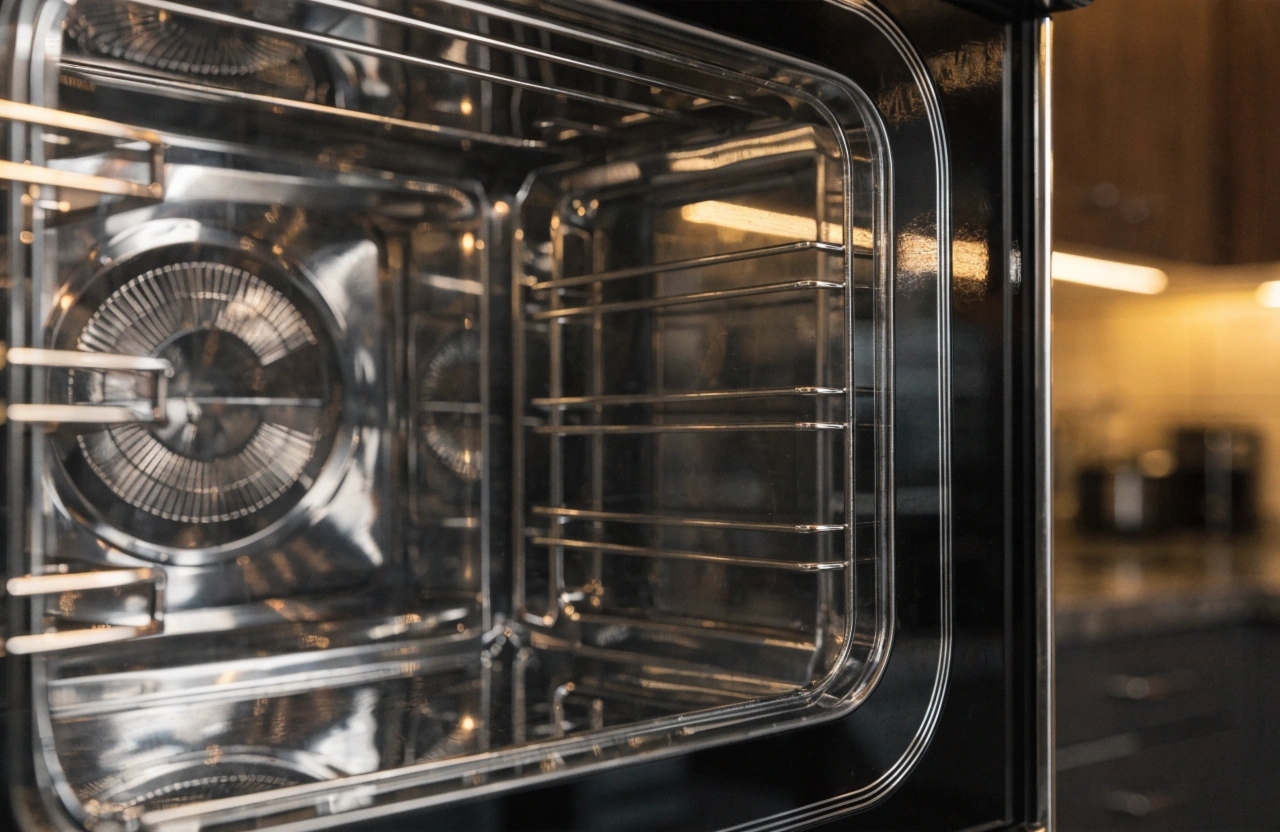
Then there’s the space between the glass panels. Most oven doors are double or triple-glazed, and grease vapour seeps into the gap between the panes over time, creating a layer of brown haze that sits inside the glass where no household spray can reach it. It looks dirty no matter how many times you wipe the surface.
Professional oven cleaning addresses both — the interior face of the door glass and, where the door design allows, the space between panels. The difference when it’s done properly is striking. A door that looked permanently stained comes back completely clear.
How Professional Oven Cleaning Actually Works
The reason professional oven cleaning delivers results that household products can’t match comes down to two things — the right products used the right way, and the time taken to do the job properly.
A professional clean starts with a full assessment of the oven — the level of buildup, the type of oven, and which components need particular attention. From there, the process is methodical.
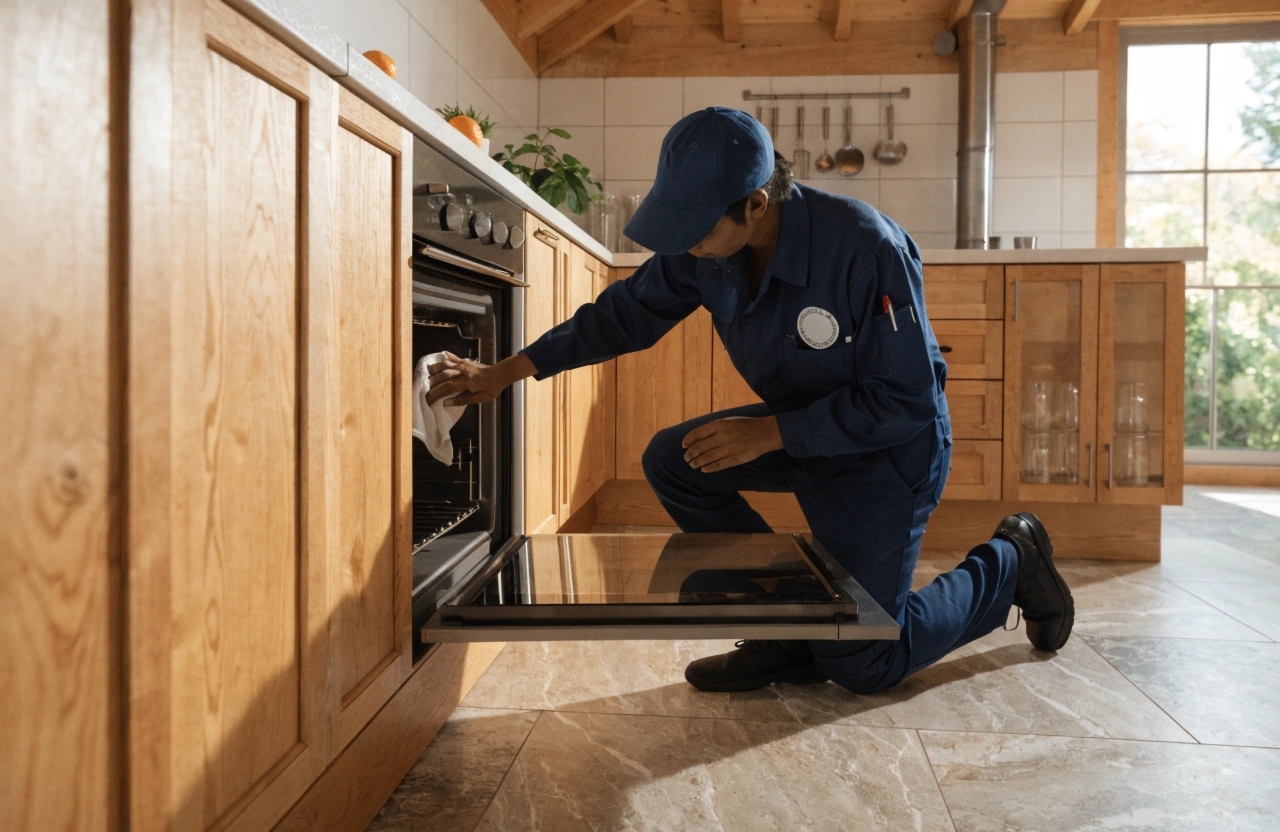
Racks, tray runners, and removable components are taken out and treated separately in purpose-formulated cleaning solutions that break down carbonised grease safely and thoroughly without the caustic aggression of supermarket sprays. While those components are soaking, the oven cavity itself gets treated with professional-grade products applied specifically to the soiled surfaces — walls, ceiling, floor, door glass, and fan housing — with careful attention to keeping product away from seals and heating elements.
The difference in the products matters. Professional cleaning solutions are formulated to penetrate and lift baked-on carbon deposits that household sprays simply can’t break down. They work on contact time and chemistry, not scrubbing pressure — which means the results are thorough without the risk of scratching internal surfaces or degrading components.
Once the products have done their work, everything gets cleaned down completely — no residue, no chemical smell, nothing left behind that could affect the taste of food or produce fumes during the next cook.
What you’re left with is an oven that looks genuinely clean throughout — not just wiped over on the surfaces you can see, but properly restored across every internal component. For Newcastle households who cook regularly, that result is something you feel every time you open the door.
How Often Should You Get Your Oven Professionally Cleaned?
This is one of the most common questions Newcastle homeowners ask — and the honest answer is that it depends on how hard your oven is actually working.
A general rule of thumb that holds up well across most households:
| Cooking Frequency | Recommended Professional Clean |
| Light use — 2 to 3 times per week, mostly simple meals | Once a year |
| Moderate use — daily cooking, regular roasts and bakes | Every 6 to 9 months |
| Heavy use — cooking multiple meals daily, batch cooking, high-fat roasting | Every 3 to 6 months |
For most Newcastle families cooking through the week — school dinners, weekend roasts, the kind of regular oven use that’s just part of running a household — twice a year sits in the right range. Once heading into the cooler months when the oven really starts earning its keep, and once coming out the other side.
The type of cooking matters too. An oven that regularly handles high-fat roasting — lamb shoulders, pork belly, whole chickens — accumulates grease deposits significantly faster than one used mainly for baking or reheating. If your Saturday night cook regularly involves something fatty at high heat, your oven is building up residue faster than you might expect.
A good practical indicator — if you’re noticing smoke when the oven heats up, uneven cooking results, or a smell that wasn’t there six months ago, those are signs the buildup has already reached a level that’s affecting performance. At that point, a professional clean isn’t optional maintenance. It’s overdue.
Frequently Asked Questions About Oven Cleaning in Newcastle
Most standard single ovens take between 1.5 and 2.5 hours depending on the level of buildup. Double ovens or range-style ovens with additional cavities will take longer. You don’t need to be present for the whole job — just available at the start and end.
Not much. Make sure the oven is switched off and cooled down completely before the appointment. Remove any loose items stored inside — trays, pans, accessories — and that’s about it. Everything else gets handled as part of the service.
No — and this is one of the biggest differences between professional cleaning and supermarket sprays. Professional products are fully residue-free when the job is complete. The first time you run the oven after a professional clean, there’s no chemical smell, no fumes, nothing. Just a clean oven doing its job.
Yes. A good professional cleaner will assess the oven type before starting and adjust their approach accordingly. Self-cleaning ovens have specific internal coatings that require careful handling — professional products and techniques account for this, where harsh household sprays often don’t.
In most cases, yes. Even ovens that haven’t been properly cleaned in several years can be restored to a genuinely clean state through professional treatment. Severely neglected ovens may require longer treatment time, but the result is almost always significantly better than the starting point.
