
Why Built-In BBQ Cleaning Is a Completely Different Job
Most cleaning services treat a built-in BBQ like a freestanding one with a fancy surround. They wipe down the grates, maybe scrub the hood, and call it done. That’s not a built-in BBQ clean. That’s barely a surface clean.
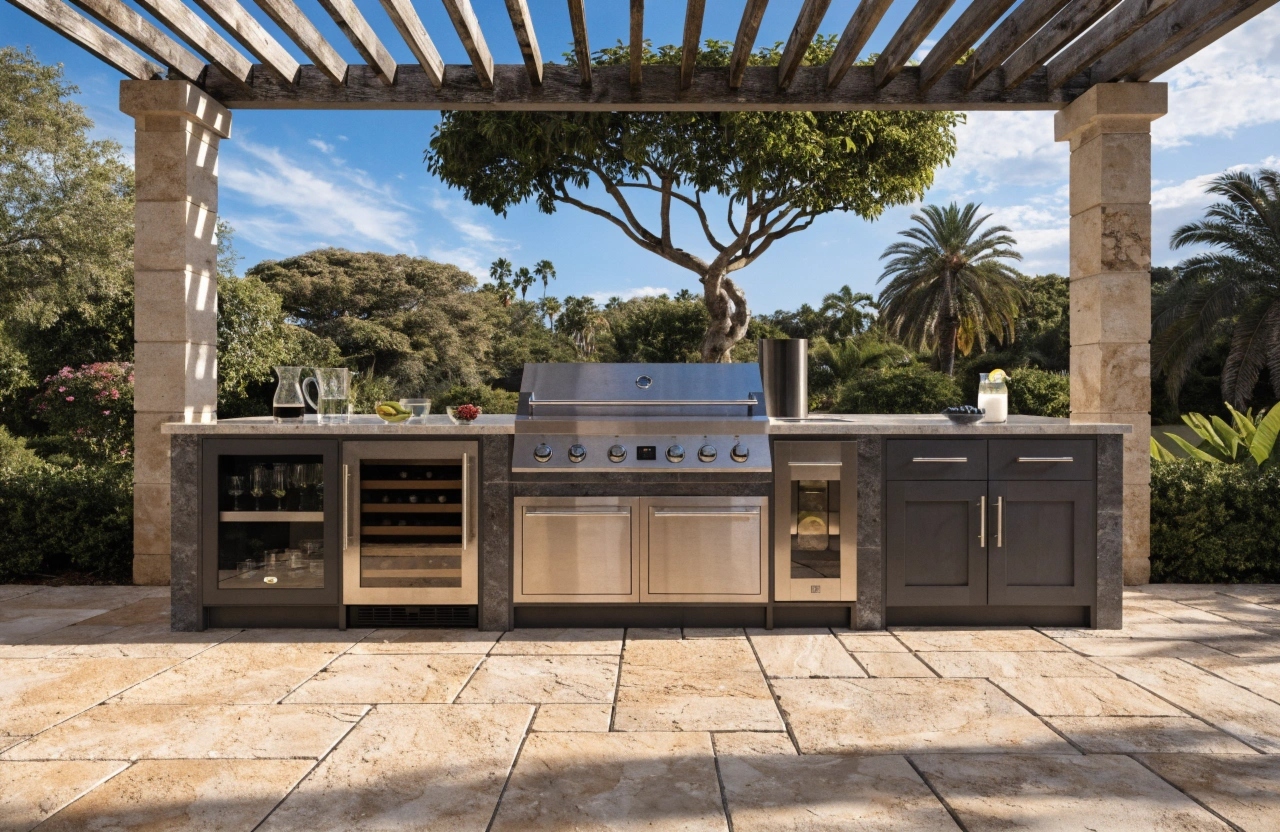
A built-in unit is fixed. It’s integrated into cabinetry, benchtops, and sometimes tiled or stone surrounds that cost more per square metre than most people spend on a whole BBQ. You can’t tilt it. You can’t move it to access the back. You can’t rinse it out with a hose without risking water damage to the surrounding materials.
The Access Challenge
Every component — the burners, grease channels, drip trays, and hood interior — has to be cleaned in situ. That means working methodically, with the right tools, in a confined space, without splashing caustic degreasers onto your stone benchtop or getting grime into the cabinetry joints.
The Surrounding Surface Challenge
Built-in BBQs are surrounded by materials that need protection during the cleaning process. Honed granite. Porcelain tile. Stainless steel trims. These surfaces react differently to heat, grease, and cleaning products. A professional who doesn’t account for that can leave staining, etching, or residue that costs significantly more to fix than the clean itself.
This is why built-in BBQ cleaning requires a specialist approach — not just someone with a bucket of degreaser and good intentions.

What a Professional Built-In BBQ Clean Actually Covers
A proper built-in BBQ clean isn’t just about the cooking surfaces you can see. It’s everything inside and around that unit — including the parts that are out of sight and rarely thought about until something goes wrong.
The Core Components We Clean
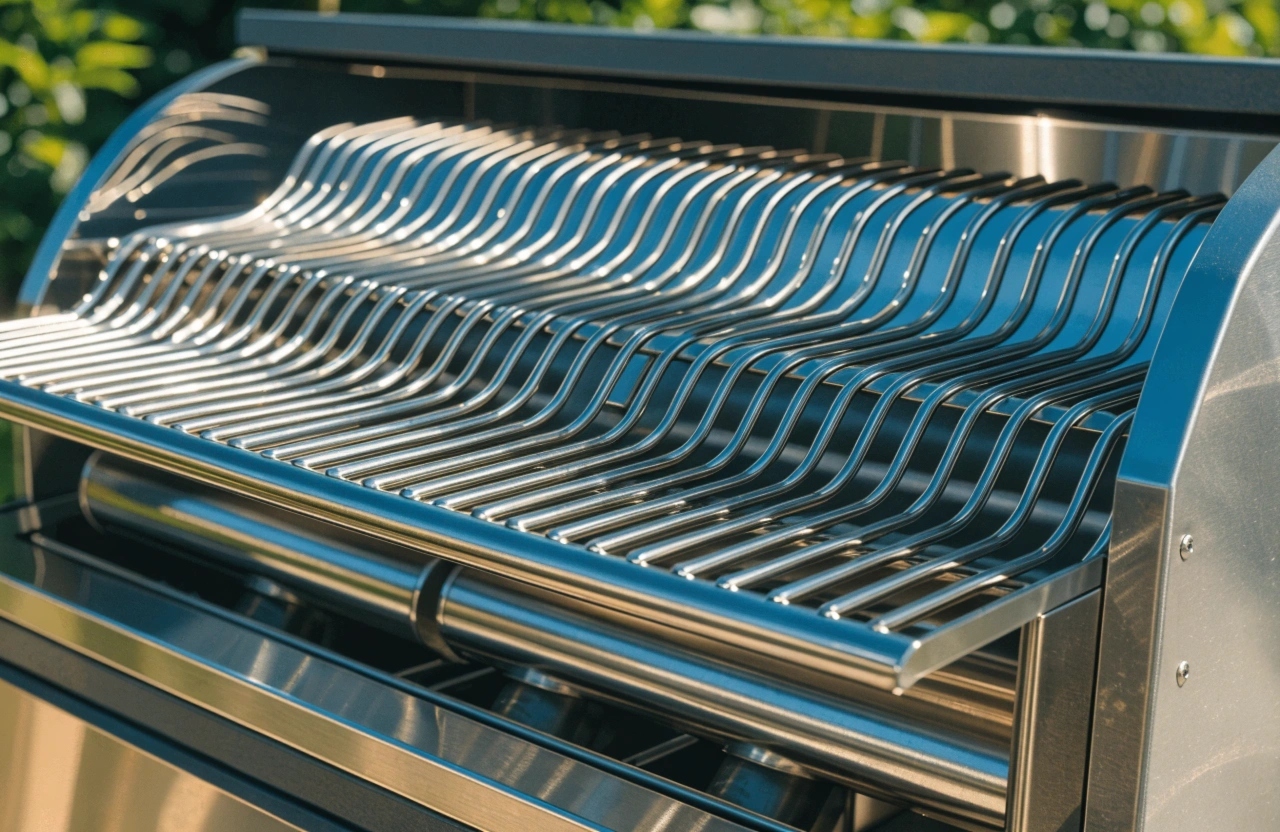
Grates and cooking grids — Carbon buildup and baked-on grease get broken down completely, not just scraped off the top. This restores even heat distribution and removes the residue that causes flare-ups and off-flavours.
Burners and burner ports — Blocked burner ports are one of the most common reasons a built-in BBQ starts cooking unevenly. We clear every port and inspect for corrosion while we’re in there.
Grease channels and drip trays — These are the parts most homeowners never touch. Accumulated grease in channels and trays is both a hygiene issue and a genuine fire risk. We clear them completely.
Hood interior — The inside of the hood collects vaporised grease with every cook. Left uncleaned, it drips back onto food and degrades the hood lining over time.
Surrounding stone, steel, and tile surfaces — We clean and degrease the benchtop surrounds, splashbacks, and cabinetry faces as part of the service, using products appropriate for each material.
Every component gets attention. Nothing gets skipped because it’s hard to reach or inconvenient to access. That’s the whole point of booking a specialist rather than attempting a DIY clean that only covers what’s easy.
The Hidden Damage Happening to Your Outdoor Kitchen Right Now
Here’s what most built-in BBQ owners don’t realise until it’s too late. The grease isn’t just sitting inside the unit. It’s migrating.
Every time you cook, vaporised grease and cooking residue travels beyond the BBQ itself. It works into the joints between the benchtop and the BBQ frame. It seeps into the edges of the surrounding cabinetry. It settles onto the stone or tile surfaces and, over time, polymerises into a hardened film that basic wiping won’t touch.
What Grease Overflow Actually Does
On natural stone benchtops — granite, bluestone, travertine — grease penetrates the surface if it’s not sealed and maintained. It causes dark staining that can be permanent if left long enough. On cabinetry joints and timber-look panels, repeated grease exposure breaks down sealants and finishes. On stainless steel surrounds, it accelerates surface oxidation in Newcastle’s salt-air coastal environment.
The Compounding Cost of Waiting
The longer the interval between professional cleans, the more grease has migrated into the surrounding installation. At a certain point, the damage isn’t just cosmetic — it’s structural. Cabinetry joints fail. Stone sealants break down. Grout lines in tiled surrounds become permanently discoloured.
A professional built-in BBQ clean doesn’t just restore the appliance. It protects the entire outdoor kitchen investment surrounding it — which in many Newcastle homes represents tens of thousands of dollars worth of custom work.
Hygiene, Pests, and What's Actually Living in Your Built-In BBQ
This is the section most people would rather skip. But if you’re cooking food for your family and guests on this equipment, it’s worth knowing what builds up inside a fixed unit that never gets moved or properly cleaned.
The Hygiene Reality
A freestanding BBQ at least gets shifted around occasionally. A built-in unit sits in exactly the same spot, cooking session after cooking session, with grease and food debris accumulating in channels, cavities, and corners that never see daylight. That environment — warm, dark, fatty — is exactly where bacteria thrive. The same residue that causes off-flavours in your food is the same residue that carries hygiene risks, particularly when you’re cooking for kids or guests with sensitivities.
The Pest Problem Nobody Talks About
Built-in outdoor kitchens in Newcastle are prime real estate for pests. Cockroaches, mice, and insects are drawn to the grease and food debris that accumulates inside a neglected built-in unit. Unlike a freestanding BBQ you can inspect from all sides, a built-in unit has enclosed cavities in the cabinetry below and around it — spots that are genuinely difficult to inspect and easy for pests to establish themselves in undetected.
Regular professional cleaning removes the food source that attracts pests in the first place. It’s not just about how the BBQ performs or looks — it’s about what you’re inviting into your outdoor kitchen when cleaning gets pushed to the back of the to-do list.
How Often Should Your Built-In BBQ Be Professionally Cleaned
This is one of the most common questions we get from Newcastle homeowners, and the honest answer is: it depends on how hard you’re running it.
The Usage-Based Guide
Heavy entertainers — monthly to every 6 weeks. If your outdoor kitchen is running most weekends through spring and summer, hosting footy season gatherings, Christmas, New Year’s, and everything in between, you’re generating significant grease accumulation with every session. At that frequency of use, a professional clean every 6 weeks keeps the unit performing properly and prevents the grease migration damage discussed earlier.
Regular home cooks — every 3 months. Using the built-in BBQ a couple of times a week for family meals puts you in this category. Quarterly professional cleaning maintains hygiene standards, keeps the burners and grease channels clear, and protects the surrounding installation from cumulative grease buildup.
Occasional users — every 6 months minimum. Even a built-in BBQ that only comes out for special occasions needs professional attention twice a year. Grease doesn’t disappear between uses — it hardens, oxidises, and attracts pests regardless of how infrequently the unit is fired up.
The Newcastle Factor
Because Newcastle’s climate means outdoor kitchens run year-round — not just in summer — most built-in BBQs here accumulate grease faster than their owners expect. A unit that might need cleaning twice a year in a colder climate often needs it three to four times a year in Newcastle. That’s just the reality of year-round coastal entertaining.

Why Your Built-In BBQ Deserves a Specialist, Not a General Cleaner
There’s a real difference between someone who cleans BBQs as part of a general cleaning run and a specialist who understands the complexity of a fixed, integrated unit in a premium outdoor kitchen. That difference shows up in the result.
What a Non-Specialist Gets Wrong
General cleaners approach a built-in BBQ the same way they’d approach a freestanding one — heavy degreaser applied broadly, a scrub down, a rinse, done. The problem is that approach doesn’t account for the surrounding materials. Stone benchtops need pH-appropriate cleaning products. Stainless steel surrounds need non-abrasive treatment. Cabinetry joints and grout lines need careful attention to avoid forcing moisture or chemical residue into areas that can’t be dried out properly.
Apply the wrong product to a honed granite benchtop and you’ll etch the surface. Use an abrasive pad on brushed stainless steel and you’ll scratch it permanently. These aren’t hypothetical risks — they’re exactly what happens when someone without specialist knowledge tackles a built-in unit.
What We Do Differently
We work carefully around every surface type in your outdoor kitchen. We assess the materials before we start, select appropriate products for each surface, and protect the surrounding installation throughout the clean. The goal isn’t just a clean BBQ — it’s a clean BBQ and an outdoor kitchen that looks exactly as good as it did before we arrived.
For Newcastle homeowners who’ve invested in a premium outdoor entertaining space in suburbs like Merewether, Bar Beach, or Fletcher, that level of care isn’t optional. It’s the whole point.
Frequently Asked Questions About Built-In BBQ Cleaning in Newcastle
Most built-in BBQ cleans take between 2 and 3 hours depending on the size of the unit, the complexity of the surrounding outdoor kitchen, and how long it’s been since the last professional clean. A heavily neglected unit with significant grease buildup in the channels and hood will take longer than a unit on a regular cleaning schedule. We always allow adequate time to do the job properly — we don’t rush a fixed installation.
No — provided the person doing the job knows what they’re working with. We assess every surface material before we start and use products appropriate for stone, tile, stainless steel, and cabinetry respectively. We never apply broad-spectrum degreasers to surfaces that can’t handle them.
Yes. Heavily neglected units take longer and require more intensive treatment, but there’s almost no built-in BBQ we can’t restore to a hygienic, fully functional condition. We’ll give you an honest assessment of the unit’s condition when we arrive and let you know if there are any components that need replacement rather than cleaning.
You don’t need to supervise, but we do ask that someone is available at the start so we can confirm access to the outdoor kitchen and discuss any specific concerns about surrounding surfaces or materials before we begin.
We can cover the full outdoor kitchen setup if that’s what’s needed. Side burners, rangehood canopies above the cooking area, surrounding benchtops, and splashbacks can all be included as part of an extended service. A lot of Newcastle homeowners with full outdoor kitchen installations book a complete clean rather than just the BBQ — it makes sense to have everything done at once and maintain the whole space consistently.
If you’re seeing flare-ups during cooking, uneven heat across the grill, visible grease buildup in the channels or hood, or any sign of discolouration on the surrounding benchtop surfaces — it’s past the point where a DIY clean will get on top of it. A wipe-down handles surface residue from recent use. It doesn’t touch hardened grease in the burner ports, accumulated debris in the drip trays, or the vaporised grease coating the hood interior. That’s the work that needs specialist equipment and proper dwell time to do correctly.
