
Why Your Cooktop Never Looks Truly Clean
Here’s the thing about cooktops — they’re the hardest working surface in your entire kitchen, and they cop the worst of it every single day.
Every time you cook, fat spatters from the pan, sauces bubble over the edge, and starchy water boils straight onto the glass or around the burner grates. In the moment, you wipe it up as best you can. But what you can’t see is the thin layer of residue that doesn’t fully come up with a cloth — the stuff that gets left behind and then gets cooked onto the surface the very next time you turn the heat on.
That’s how carbonised buildup happens. It’s not neglect. It’s just physics. Heat bakes residue into the surface layer by layer, and over time that accumulation becomes something that no kitchen spray is going to shift on its own.
Most supermarket cleaning products are formulated for regular surface grime — not for the polymerised grease and carbon deposits that come from months of daily cooking in a busy Newcastle household. They’ll clean what’s sitting on top, but they won’t touch what’s been baked in underneath.
The Result?
A cooktop that looks dull, stained, and grimy no matter how often you clean it. And the longer that buildup sits there, the harder it becomes to remove without the right professional-grade products and technique.
Professional cooktop cleaning gets into that layer of baked-on residue and removes it properly — restoring the surface rather than just wiping over the top of the problem.

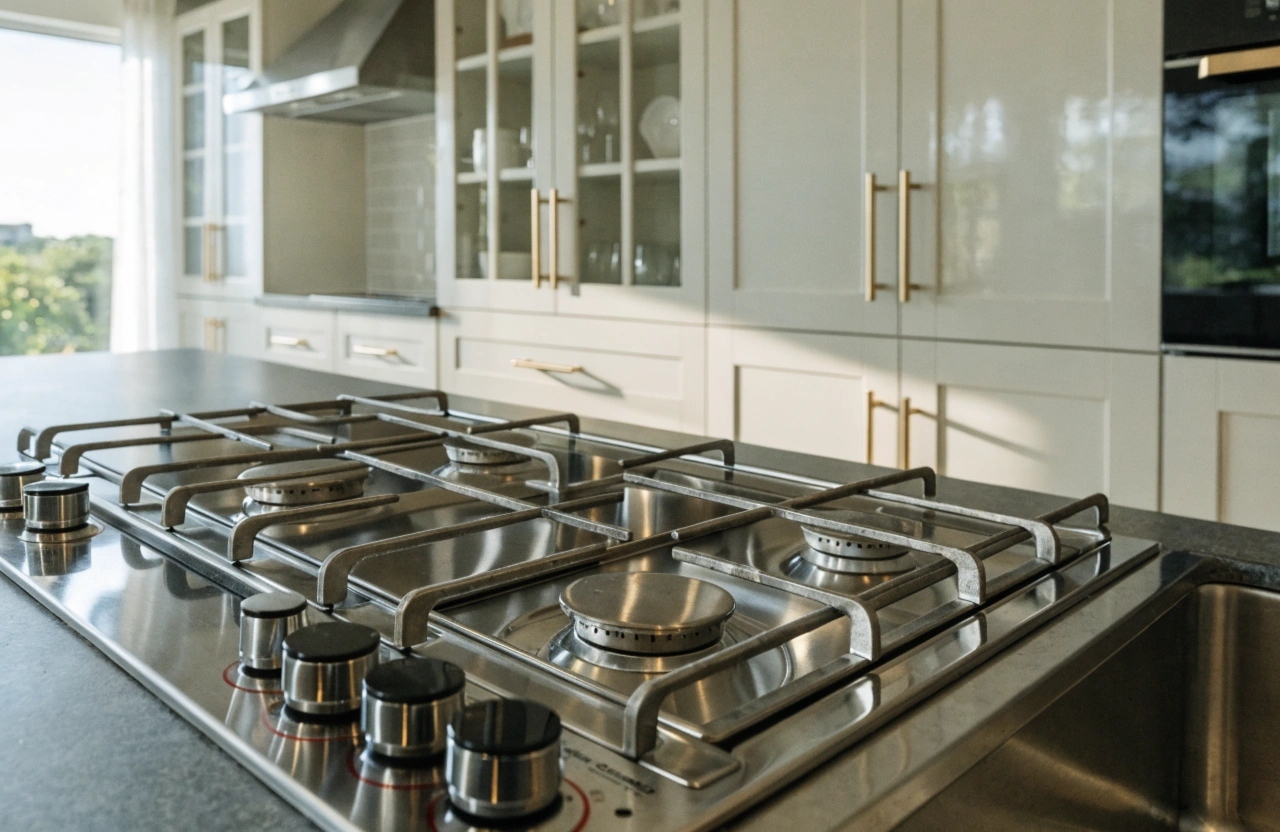
The Three Cooktop Types — And Why Each One Needs a Different Approach
Not all cooktops are the same, and cleaning them as if they are is one of the fastest ways to cause permanent damage. Gas, ceramic electric, and induction surfaces each have their own materials, their own vulnerabilities, and their own cleaning requirements.
Gas Cooktops
Gas cooktops have the most components to clean — burner grates, burner caps, burner ports, and the pan supports all collect grease and food residue in different ways. The grates and caps can be soaked and treated, but the burner ports need careful attention. Baked-on residue blocking those ports restricts gas flow, causes uneven or lazy flames, and forces your cooktop to work harder than it should — which affects both your cooking performance and your energy efficiency. The wrong tool pushed into those ports can cause damage that affects the burner permanently.
Ceramic Electric Cooktops
Ceramic surfaces look sleek but they’re deceptively difficult to clean properly. Burnt sugar and overboiled liquids bond to the glass at high heat and create stains that look permanent — because without the right treatment, they essentially are. Abrasive pads or the wrong cleaning product will scratch the surface or strip the protective coating, making the problem worse and the damage irreversible.
Induction Cooktops
Induction glass tops face the same scratch risk as ceramic surfaces but with even less tolerance for harsh products. Residue from spills and splatters still accumulates around the edges and control zones, and removing it safely requires food-safe, non-abrasive solutions applied with the correct technique.
The Hygiene Problem Nobody Talks About
Most people think about cooktop cleaning as an aesthetic issue — it looks dirty, so they want it to look clean again. Fair enough. But there’s a more pressing reason to deal with baked-on cooktop buildup, and it’s got nothing to do with appearances.
When grease and food residue gets cooked into the cracks and crevices around your burners, controls, and cooktop surface day after day, it doesn’t just sit there harmlessly. Old grease is a breeding ground for bacteria. Every time you cook over a surface with months of accumulated residue baked into the gaps, you’re cooking directly above that contamination.
What’s Actually Living in Your Cooktop
Burnt food particles trapped under burner caps and around control zones are exactly the kind of organic matter that bacteria thrive on. In a busy Newcastle household cooking multiple meals daily — especially through the humid summer months — that combination of heat, moisture, and old food residue creates conditions that a daily wipe-down simply can’t address.
For families with young kids, this is worth taking seriously. The cooktop is where your food gets prepared. It should be genuinely clean — not just wiped over.
Beyond bacteria, old grease buildup around gas burner ports is also a fire risk. Accumulated fat residue sitting directly next to an open flame isn’t something to be complacent about.
Professional cooktop cleaning removes that deep-seated residue entirely — not just from the visible surface, but from the components, the gaps, and the areas that everyday cleaning never reaches.
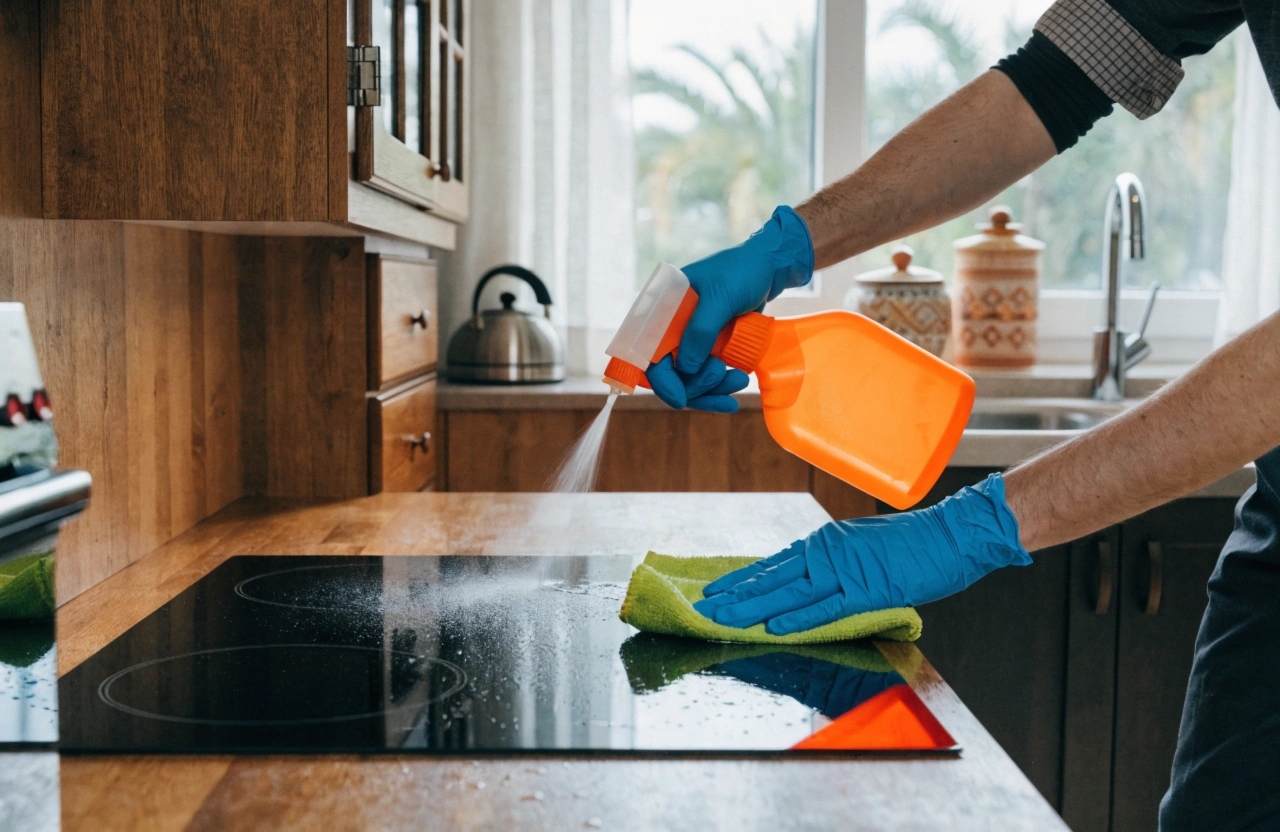
How Professional Cooktop Cleaning Actually Works
There’s a big difference between wiping a cooktop down and actually restoring it. Professional cooktop cleaning isn’t just the same job done harder — it’s a completely different process using equipment and products that aren’t available off the supermarket shelf.
The Right Products for Each Surface
Every cooktop type gets treated with products matched specifically to that surface. Ceramic and induction glass tops get food-safe, non-abrasive treatments that dissolve carbonised residue without scratching or stripping the protective coating. Gas burner components get soaked and treated with degreasers formulated to break down polymerised grease — the kind that’s been through dozens of heat cycles and has essentially fused to the metal surface.
Nothing harsh. Nothing that leaves chemical residue behind on a surface you’re going to cook on tomorrow.
Getting Into the Components
Professional cleaning goes beyond the visible surface. Burner grates, burner caps, and burner ports all get individual attention. Blocked ports get carefully cleared to restore proper gas flow and even flame distribution. Control zones, trim edges, and the areas around knobs and dials — the spots that never get properly reached with a kitchen cloth — all get properly cleaned and degreased.
The Result You Can Actually See
When the job is done, the difference is immediate. Surfaces that looked permanently stained come back to life. Burners that were producing uneven flames perform properly again. And the whole cooktop looks the way it did when it was new — or close enough that you’ll wonder why you didn’t book this sooner.
How Often Should Your Cooktop Be Professionally Cleaned?
Daily wiping is still worth doing — it keeps the surface manageable and stops fresh spills from baking on immediately. But a daily wipe was never going to replace a proper professional clean, and the two aren’t really doing the same job.
How often you need professional cooktop cleaning comes down to how hard your cooktop is actually working.
Cooking Frequency Matters More Than Time
A Newcastle household cooking one light meal a day is going to accumulate buildup at a very different rate to a family of five running the cooktop hard for breakfast and dinner every single day. It’s not about how many months have passed — it’s about how many heat cycles that surface has been through and what’s been cooked on it.
As a general guide:
• Heavy use households — families cooking multiple meals daily, frying regularly, or cooking high-splatter meals like stir fries, curries, and pasta — benefit from a professional clean every 3 to 4 months
• Moderate use households — cooking once daily with a mix of meal types — every 6 months is a practical interval
• Light use households — cooking a few times per week — an annual professional clean alongside your general kitchen deep clean is typically sufficient
A Good Way to Think About It
If your cooktop is visibly discoloured, if your gas flames are uneven, or if you’ve scrubbed it and it still doesn’t look clean — that’s not a frequency question anymore. That’s a signal that the buildup has already gone past what regular cleaning can manage, and it’s time to book a professional service.

Newcastle's Local Cooktop Cleaning Specialists
There’s no shortage of general cleaning services in Newcastle. What’s harder to find is a specialist who actually understands the difference between a ceramic cooktop and an induction surface, knows why you can’t use the same approach on both, and has the right products on the van to handle either one correctly on the same day.
That’s what we bring to every job.
We work across Newcastle and the surrounding suburbs — Kotara, Charlestown, New Lambton, Waratah, Hamilton, Mayfield, Cardiff, and beyond. We’re not a Sydney company covering Newcastle as an afterthought. This is our local market, and we know the kinds of kitchens and cooktops that Newcastle households are actually running.
What You Can Expect When You Book
• A professional clean matched specifically to your cooktop type — gas, ceramic, or induction
• Food-safe products throughout — nothing harsh left behind on a surface you cook on daily
• Careful, component-level cleaning of burner grates, caps, and ports on gas cooktops
• Safe, scratch-free treatment of ceramic and induction glass surfaces
• Honest, straightforward service with no hidden costs and no damage to your cooktop
No Lock-Ins. No Fuss.
You don’t need to commit to a package or sign up for anything. Book a single clean, see the result, and go from there. Most of our Newcastle customers come back regularly once they see what a properly cleaned cooktop actually looks and performs like — because there’s a real difference, and it’s immediately obvious.
Frequently Asked Questions About Cooktop Cleaning in Newcastle
Most residential cooktop cleans take between 45 minutes and 90 minutes depending on the cooktop type, size, and how much buildup has accumulated. A heavily soiled gas cooktop with multiple burners will naturally take longer than a lightly used induction surface. We’ll give you a realistic timeframe when you book.
No. We use non-abrasive, surface-specific products on glass and ceramic cooktops. The whole point of using the right professional products is that they break down the residue chemically rather than physically — so there’s no scrubbing, no scratching, and no risk to the surface coating.
Uneven or lazy flames are usually caused by blocked burner ports — a direct result of baked-on residue restricting gas flow. In most cases, a thorough professional clean of the burner caps and ports restores proper flame distribution. If the issue is mechanical rather than buildup-related, we’ll let you know.
That’s entirely up to you. Many of our Newcastle customers are happy to be home, but it’s not a requirement. We just need access to the kitchen and a power point nearby.
That’s actually the most common situation we walk into. A first professional clean on a heavily used cooktop will take a little longer, but the result is the same — a properly restored surface ready for daily cooking again.
