
What Actually Happens During a Professional BBQ Deep Clean
A lot of people hear “deep clean” and picture someone spending a bit more time with a scrubbing pad. That’s not what this is.
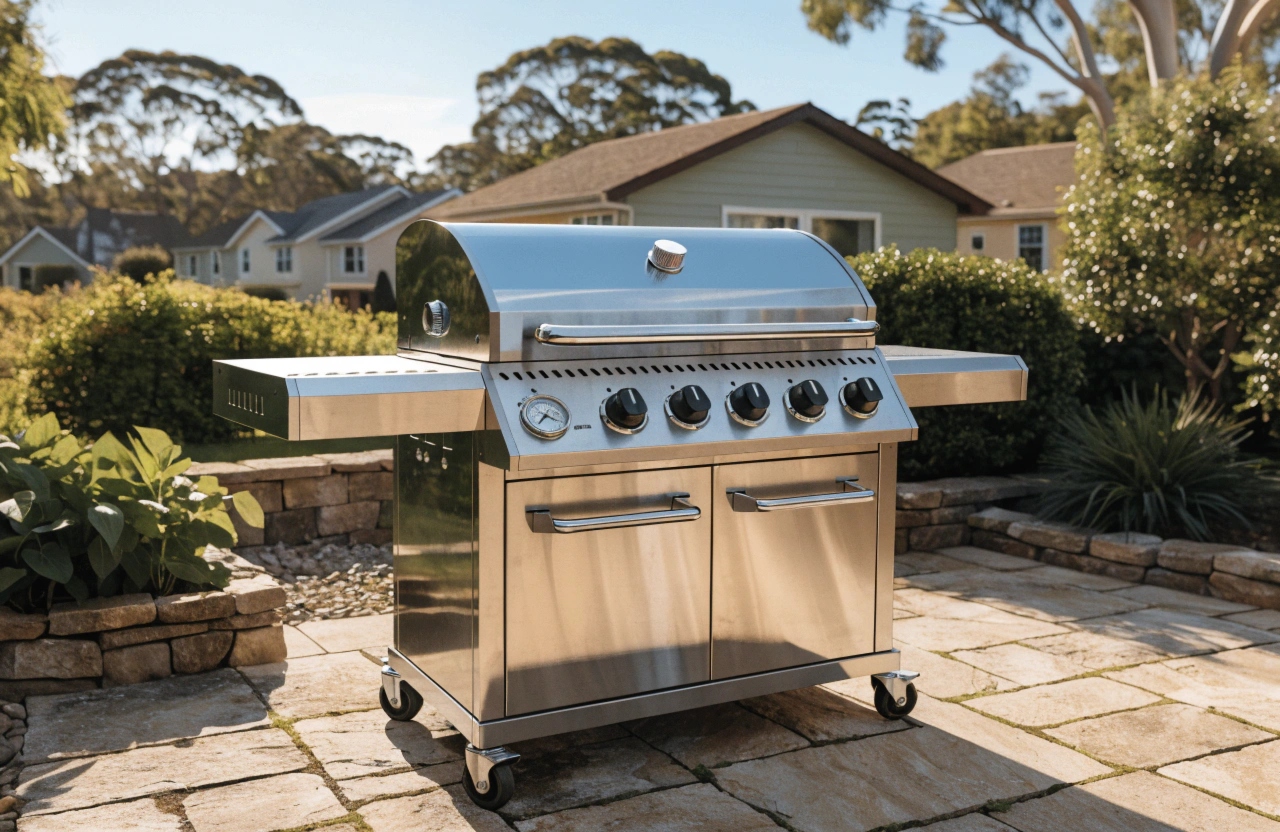
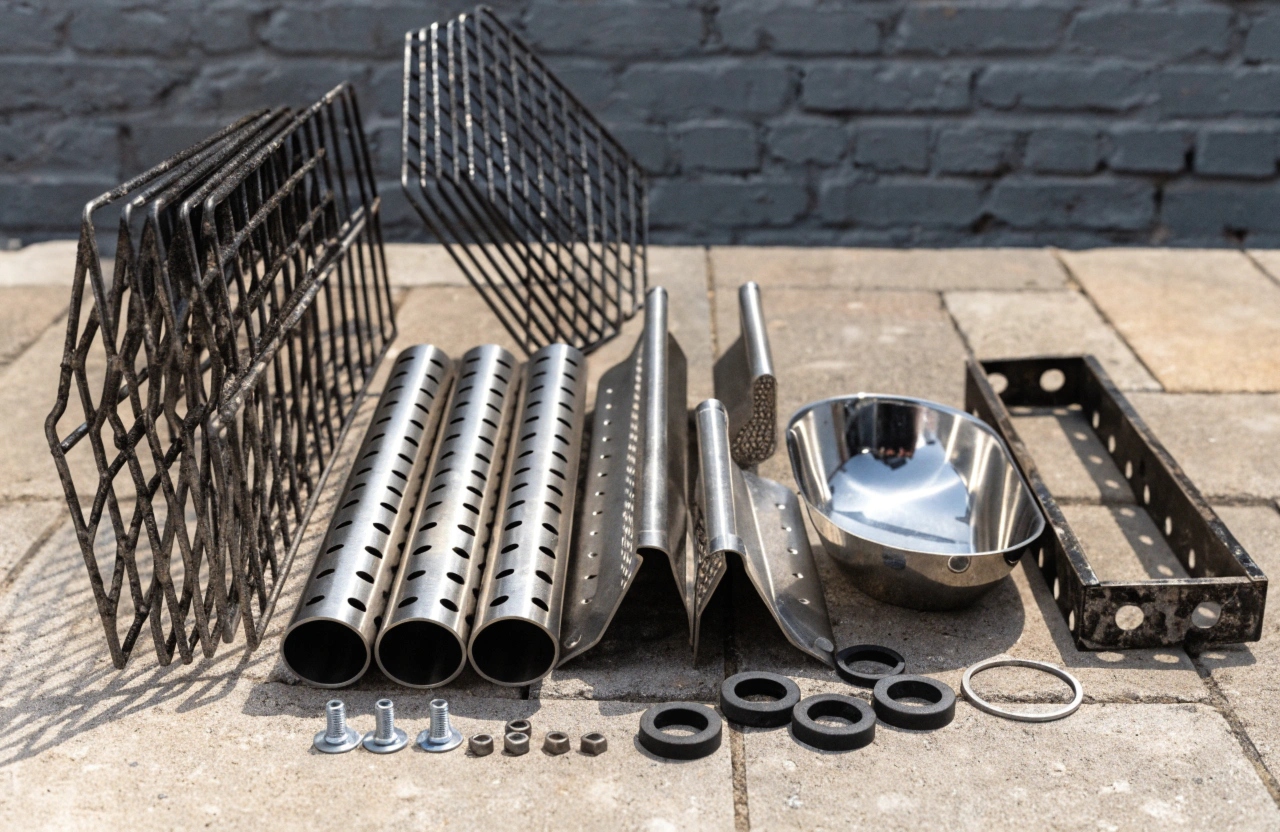
A professional BBQ deep clean starts with a full disassembly. Every removable component comes off the unit — grill grates, burner tubes, heat shields, drip trays, grease collectors, ignition housings, side shelves, and the cook box itself. Each part is then cleaned individually using professional-grade degreasers and specialist tools matched to the material and condition of each component.
Once every part has been treated, rinsed, and inspected, the BBQ is reassembled carefully and tested to make sure everything is functioning the way it should be.
Here’s what that process covers on a typical Newcastle backyard BBQ:
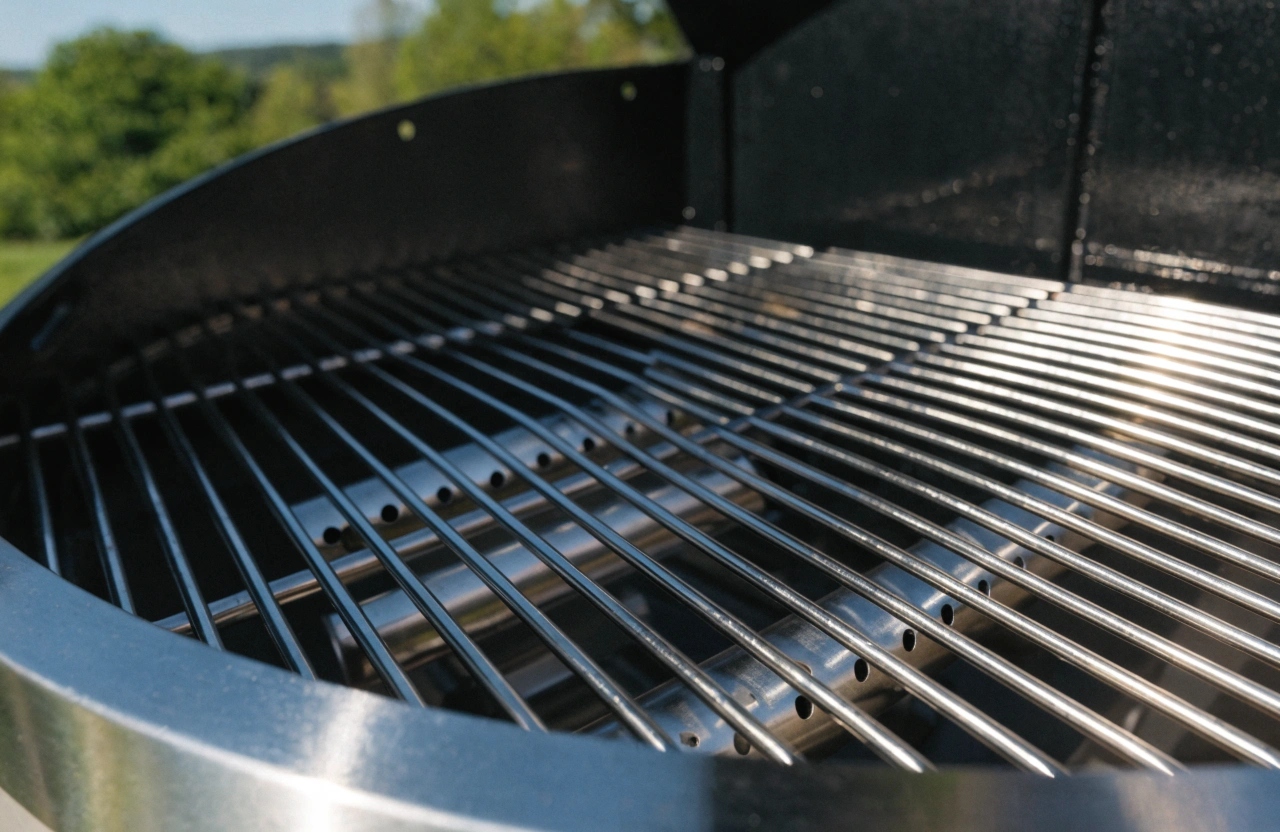
• Grill grates — full degreasing and carbon removal, wire brushed and treated
• Burner tubes — cleared of blockages, port-by-port inspection for even gas flow
• Heat shields / flame tamers — stripped of baked-on grease and carbon buildup
• Drip tray and grease channels — emptied, scraped, and degreased to the base
• Cook box interior — full decarb of all internal surfaces
• Ignition housing — cleaned and checked
• Exterior surfaces — degreased and wiped down to match the internal standard
The result isn’t just a cleaner BBQ. It’s a BBQ that looks, smells, and performs like it did when it came out of the box.

Deep Clean vs Standard BBQ Clean — What's the Difference?
A standard BBQ clean is a regular maintenance service. It keeps a well-maintained BBQ in good working order, addresses surface-level grease and carbon buildup, and is ideal for a BBQ that gets cleaned every few months. Think of it like a regular car service — it keeps things running properly between the bigger jobs.
A deep clean is the bigger job.
The difference comes down to three things — disassembly, time, and reach.
| Standard Clean | Deep Clean | |
| Disassembly | Partial — grates and trays removed | Full — every removable component stripped |
| Time on site | 45–75 minutes | 2–3+ hours depending on condition |
| Components cleaned | Accessible surfaces | Every part, including hidden channels and housings |
| Grease removal depth | Surface and visible buildup | Multi-season buildup, baked carbon, and residue in cavities |
| Result | Maintained and serviceable | Restored to near-new condition |
A standard clean won’t get behind the burner tubes. It won’t reach inside the grease channels or the base of the cook box where old grease has been carbonising for months. It’s not designed to — that level of access takes time and a full strip-down.
For Glendale and Cardiff homeowners running their BBQ hard every weekend, a deep clean once a year alongside regular maintenance cleans is the combination that keeps the whole unit in top shape long-term.
Signs Your Newcastle BBQ Is Overdue for a Deep Clean
Some BBQs tell you exactly what they need. You just have to know what to look for.
A standard maintenance clean can handle normal buildup between uses. But there are specific warning signs that mean your BBQ has gone past that point — and pushing through with a basic service won’t fix what’s actually going on underneath.
Watch out for these:
• Excessive smoke on startup — a small amount of smoke when you first fire up is normal. Thick, persistent smoke that doesn’t clear points to heavy grease and carbon buildup in the cook box and on the heat shields
• Persistent bad odours — if your BBQ smells off even after it’s been burning for 10–15 minutes, old grease residue is the likely cause
• Visible mould — common on Newcastle BBQs that have sat through a wet period or been stored with the cover on while still damp. Mould inside a cook box needs more than a surface wipe
• Flare-ups during cooking — regular flare-ups mean grease has accumulated in the drip tray, channels, and beneath the heat shields to the point where it’s igniting during normal use
• Uneven heat across the grill — blocked burner ports from grease and carbon buildup are the most common cause of hot and cold spots
• A BBQ that hasn’t been professionally cleaned in 12+ months — even without obvious symptoms, a full season of regular use in Newcastle’s year-round entertaining climate will build up more than a standard clean can address
If two or more of these apply to your BBQ, a deep clean is the right call — not a standard service.
How a Professional Deep Clean Brings Your BBQ Back to Life
There’s a reason a neglected BBQ never quite cooks the way it used to. It’s not age. It’s not wear. In most cases, it’s what’s built up inside it.
Every layer of carbonised grease sitting on a heat shield is a layer of insulation between the burner and your food. Every blocked burner port is a flame that isn’t firing the way it should. Every grease-clogged channel is a flare-up waiting to happen. The performance drop you’ve been putting up with isn’t the BBQ deteriorating — it’s the BBQ struggling to work through months or seasons of accumulated buildup.
A professional deep clean removes all of it.
When the burner tubes are clear, gas flows evenly across every port and you get consistent heat from one end of the grill to the other. When the heat shields are stripped back to bare metal, they transfer heat the way they were designed to. When the cook box interior is decarbed and the drip channels are clear, flare-ups stop and temperature control comes back.
The difference after a proper deep clean is something most Newcastle homeowners notice immediately — the BBQ heats faster, holds temperature better, and cooks more evenly than it has in a long time.
For a BBQ that’s been running hard through consistent Warners Bay summers and Cardiff winter gatherings, that kind of full reset doesn’t just feel good. It makes a genuine, noticeable difference every single time you cook on it.
What's Actually Living in Your BBQ — And Why a Deep Clean Fixes It
Performance is one thing. But for a lot of Newcastle homeowners — especially those cooking for kids and family — the hygiene side of a deep clean matters just as much.
Here’s the reality. A BBQ that’s been used regularly through multiple seasons without a professional deep clean isn’t just dirty. It’s carrying bacteria, mould spores, and decomposing grease residue in places that never see daylight. The grease trap under the drip tray. The interior base of the cook box. The underside of heat shields where moisture and old fat combine between uses.
In Newcastle’s humid summers, that process accelerates. Warm temperatures and coastal moisture create exactly the kind of environment where bacteria and mould thrive inside a closed BBQ cover.
A professional deep clean addresses all of it:
• Old grease residue — fully removed from every surface, channel, and cavity rather than just the visible areas
• Mould growth — treated and eliminated, not just wiped over
• Bacteria buildup — food-safe sanitisation applied after degreasing across all food-contact surfaces
• Carbon deposits — stripped from grates and cook box interior where they can transfer to food during cooking
This is the reset that a standard clean can’t deliver. Once every component has been individually cleaned, treated, and reassembled, you’re cooking on a surface that’s genuinely hygienic — not just one that looks cleaner than it did before.
For families in Wallsend and Glendale who use their BBQ as a genuine weekly cooking tool, that hygiene reset isn’t a luxury. It’s the whole point.
Why a Deep Clean Is the Smartest Way to Protect Your BBQ Investment
A quality backyard BBQ in Newcastle isn’t a cheap purchase. A decent four or six burner Weber, Beefeater, or Ziegler & Brown represents anywhere from $800 to $2,500 sitting in your backyard. And like any piece of equipment that works hard year-round, what you put into maintaining it directly determines how long it lasts.
The biggest threat to a BBQ’s lifespan isn’t how often you use it. It’s what gets left inside it between uses.
Grease that sits in channels and cavities doesn’t just stay as grease. It oxidises, it carbonises, and over time it starts to corrode the metal components around it. Burner tubes that never get properly cleared develop uneven wear. Drip trays that stay coated in old fat accelerate rust formation — particularly in Newcastle’s salt-air coastal suburbs where corrosion already has a head start.
A professional deep clean interrupts that cycle completely.
By stripping every component back, removing every layer of corrosive buildup, and reassembling the unit clean, a deep clean effectively resets the deterioration clock. BBQs that receive an annual deep clean alongside regular maintenance services consistently outlast neglected units by years — often delaying replacement by three to five years or more.
For a Newcastle homeowner who’s already invested in a quality unit, that’s not a minor saving. Spending a fraction of the replacement cost on a proper annual deep clean is one of the most straightforward ways to protect what you’ve already paid for and keep it performing the way it should for the long haul.
BBQ Deep Cleaning Newcastle — Common Questions Answered
For a BBQ that gets regular use in Newcastle’s year-round entertaining climate, once a year is the standard recommendation for a full deep clean. Pair that with a standard maintenance clean every three to four months and you’ve got a schedule that keeps the unit performing well and genuinely hygienic between the bigger annual service.
Most residential BBQs take between two and three hours on site. Heavily neglected units or larger built-in outdoor kitchen setups can take longer. We’ll give you a realistic time estimate when you book based on the make, model, and condition of your BBQ.
Yes. We work across all major brands common in Newcastle homes — Weber, Beefeater, Ziegler & Brown, Matador, Everdure, and more. The process is adapted to the specific configuration of each unit.
In most cases, yes. A BBQ that’s been well built but heavily used often just needs a full reset to perform well again. After a professional deep clean, most homeowners are genuinely surprised at how much life is left in a unit they were considering replacing.
We just need access to the BBQ and a water source. Many Newcastle customers head out while we work and come back to a BBQ that looks completely different.