
Why BBQ Grill Cleaning Is Different From a General BBQ Clean
Most people think cleaning a BBQ means wiping down the hood, emptying the grease tray, and giving the outside a once-over. That’s maintenance. What we’re talking about here is something different — and a lot more important.
The grill grate is the only part of your BBQ that touches your food directly, every single cook. It’s the surface that proteins bond to, where fat drips and carbonises at high heat, and where bacteria from raw chicken or meat from your last session can sit dormant until next time. The rest of your BBQ can be spotless, but if those grill bars are coated in layers of old carbon and grease, that’s what’s flavouring your food.
General BBQ cleaning focuses on the firebox, burners, grease trap, and exterior. Grill cleaning is a completely separate process — it requires soaking, targeted degreasing, and material-specific treatment depending on whether your grates are cast iron, stainless steel, or porcelain-coated.
Newcastle homes run their BBQs hard. The combination of year-round cooking — something our climate genuinely supports — and the salt air rolling in off the coast means grill grates here deteriorate faster than in most other Australian cities. A grill that gets used weekly in Hamilton or Merewether needs more than a quick brush between sessions. It needs a proper, methodical clean that gets into every bar, every groove, and every contact surface your food lands on.

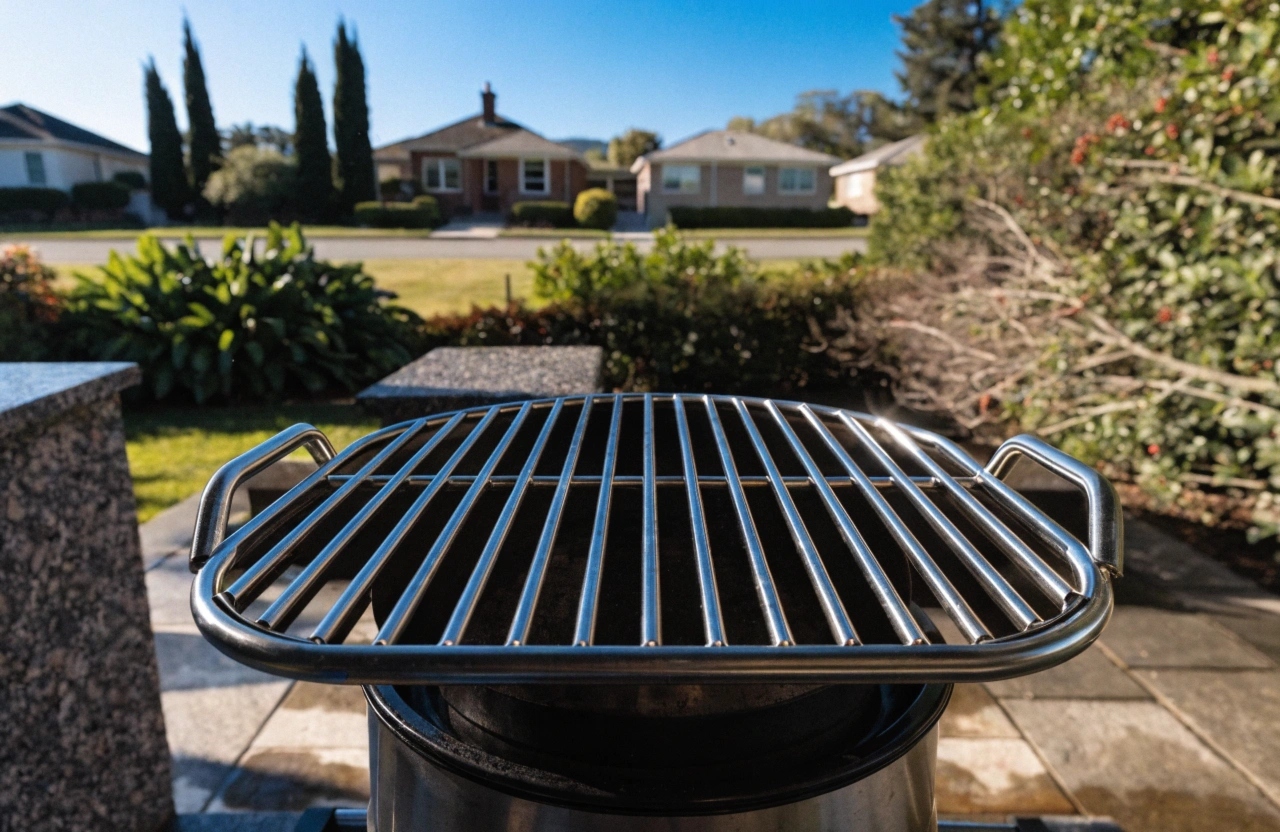
What's Actually Building Up on Your Grill Bars
This is the part most people don’t want to think about — but probably should.
Every time you cook on your BBQ, a layer of carbonised grease, burnt food residue, and fat deposits bonds to the surface of your grill bars. The first few cooks, it’s barely noticeable. By the six-month mark on a regularly used grill, those layers have compacted into a hard, black coating that no amount of casual wire brushing is going to shift.
Here’s what’s living on neglected grill grates:
• Carbonised grease — old fat that’s been repeatedly heated and re-hardened into a thick, bitter-tasting coating that transfers directly onto your food
• Food residue — protein and sugar compounds from previous cooks that burn unevenly and create that acrid, off-flavour you sometimes get on the first few minutes of a cook
• Bacteria — organisms from raw meat that survive between sessions, particularly in the crevices where bar meets bar
• Rust formation — especially relevant in coastal Newcastle suburbs like Stockton, Bar Beach, and Redhead, where salt air attacks bare metal on grill bars that have had their protective coating worn away
The rust issue deserves particular attention. Once rust takes hold on a grill bar — and in Newcastle’s coastal conditions it moves quickly — it spreads laterally across the surface if left untreated. What starts as a few spots becomes structural deterioration that compromises the entire grate.
Professional cleaning addresses all of it, not just the visible layer on top.
The Problem With Wire Brushing — And Why It's Not Enough
The wire brush is the go-to tool for most Newcastle backyard cooks. Quick scrub before the heat goes on, maybe another one after — job done, right? Not quite.
Wire brushing does remove surface-level residue when your grill is hot, and it’s a reasonable habit between cooks. But it has two significant limitations that most people aren’t aware of.
It Doesn’t Remove Compacted Carbon Buildup
A wire brush works on loose residue. Once grease and food deposits have carbonised and bonded to the surface of your grill bars — which happens after multiple cooks without a deep clean — bristle brushing just scratches the top layer. The compacted carbon underneath stays exactly where it is, continuing to affect heat distribution and flavour with every cook.
Loose Bristles End Up on Your Food
This one is genuinely serious. Wire brush bristles break off during use — they’re invisible against the dark surface of a grill bar, and they transfer directly onto food during cooking. There are documented cases across Australia of wire bristles causing internal injuries after being ingested unknowingly. It’s not a theoretical risk.
Professional cleaning eliminates both problems. Soaking, steam treatment, and food-safe degreasing compounds break down compacted carbon without abrasive wire contact. Your grill bars come out clean at a structural level — not just on the surface — and there’s no bristle contamination risk anywhere in the process.
For Newcastle households cooking for kids and families on weekends, that’s not a small thing.
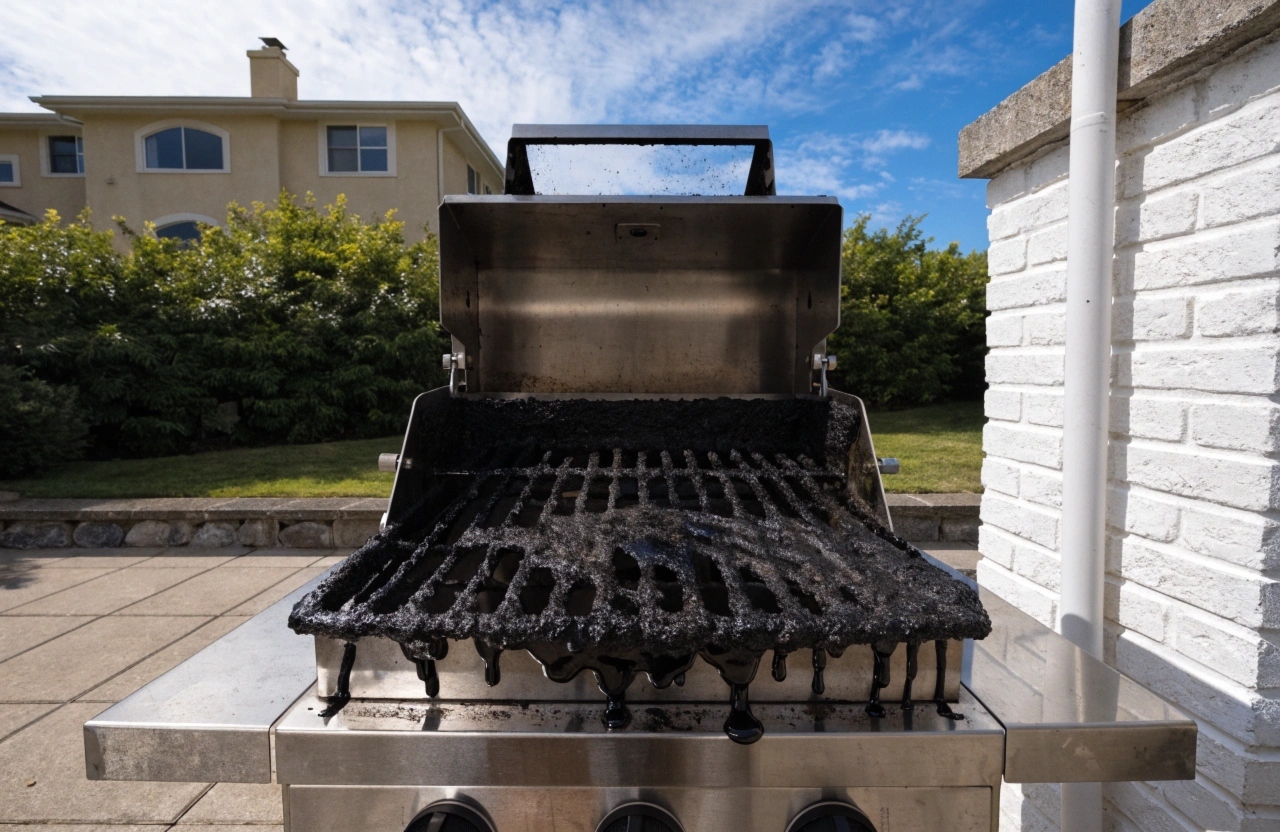
How Carbon Buildup Kills Your Cooking Performance
A dirty grill doesn’t just look bad — it actively works against you every time you cook. And once you understand what’s happening at a heat transfer level, it’s hard to ignore.
Clean grill bars conduct and distribute heat evenly across their surface. That’s what gives you proper sear marks, consistent cooking temperature, and food that releases cleanly when it’s ready. Carbon buildup disrupts all of that.
Uneven Heat Distribution
Compacted carbon acts as an insulating layer on your grill bars. Some sections run hotter than others, some barely reach temperature at all. The result is food that burns in one spot and undercooks in another — frustrating for anyone who takes their grilling seriously, and a genuine food safety issue when it comes to chicken or sausages that need to hit a consistent internal temperature.
Food Sticking and Tearing
When grill bars are coated in old carbon and grease residue, food bonds to the surface rather than releasing cleanly. Steaks tear when you try to turn them. Fish falls apart. The natural non-stick quality of a properly seasoned, clean grill grate is completely undermined by layers of built-up residue.
Off-Flavours Transferring to Food
Old carbonised deposits burn at lower temperatures than clean metal. Every cook on dirty grill bars introduces bitter, acrid compounds into your food — subtle enough that you might not immediately identify the source, but noticeable enough that your BBQ never quite tastes the way it should.
Newcastle’s weekend grill culture deserves better than that.
How We Clean Your Grill Grates — The Professional Process
There’s a significant difference between scrubbing a grill at home with whatever’s under the sink and a methodical professional clean that actually restores the surface to proper working condition. Here’s what that process looks like in practice.
Soaking and Carbon Breakdown
The first stage is soaking the grill grates in a food-safe degreasing solution that penetrates and loosens compacted carbon deposits at a chemical level. This is what no wire brush or supermarket spray can replicate — the dwell time and formulation of a professional-grade degreaser gets underneath the carbon layer rather than just working on the surface.
Steam Cleaning
Steam is one of the most effective tools for grill cleaning because it breaks down grease and residue without abrasive contact with the grate surface. For porcelain-coated grates in particular — where physical scrubbing risks chipping the coating — steam treatment is the method that cleans thoroughly without causing damage.
Material-Specific Treatment
Not all grill grates are the same, and they don’t all respond to the same cleaning approach:
• Cast iron grates — require careful treatment to avoid stripping the seasoning layer that protects the metal and provides natural non-stick properties
• Stainless steel grates — can handle more direct treatment but need the right degreaser to avoid surface discolouration
• Porcelain-coated grates — are the most delicate — abrasive cleaning chips the coating, exposing the metal underneath to rust
Getting the method wrong damages the grate. Getting it right restores it — and in most cases, saves Newcastle homeowners the cost of a full grate replacement.
How Often Should You Get Your Grill Grates Professionally Cleaned?
There’s no single answer that fits every household — but there are some clear guidelines based on how often you’re cooking and what you’re putting on the grill.
Cooking Frequency as the Primary Factor
| Cooking Frequency | Recommended Professional Clean |
| 3+ times per week | Every 3 months |
| Once or twice per week | Every 6 months |
| Occasional weekend use | Annually, ideally pre-summer |
| Holiday home / seasonal use | Before and after peak season |
Newcastle’s climate means most households fall into that once or twice per week category — possibly higher during the warmer months when Merewether and Cooks Hill backyards are running their BBQs through Friday nights and all weekend.
What You’re Cooking Matters Too
High-fat foods accelerate grease buildup significantly faster than lean proteins or vegetables. If your regular rotation includes lamb chops, pork belly, chicken thighs, or heavily marinated cuts — all staples of a decent Newcastle weekend cook — your grill bars are accumulating carbon and grease residue at a faster rate than someone cooking fish or lean steak.
The Salt Air Factor
For households within a few kilometres of the Newcastle coastline — Stockton, Bar Beach, Redhead, Swansea — the corrosive effect of salt air on exposed grill bars means rust formation can begin within weeks of the protective surface being compromised. More frequent professional cleaning isn’t just about hygiene here. It’s about catching rust early before it spreads across the full grate surface and forces a replacement that could’ve been avoided.
A clean grill lasts significantly longer. It really is that simple.
Frequently Asked Questions — BBQ Grill Cleaning Newcastle
Most residential grill cleans take between 45 minutes and 90 minutes depending on the size of the grate, the type of material, and how long it’s been since the last proper clean. Heavily neglected grates with significant rust or compacted carbon buildup may take longer — we’ll always give you a realistic timeframe before we start.
In most cases, yes. Surface rust and even moderately corroded grates can be treated and restored to a safe, functional condition through professional cleaning and rust treatment. The exception is structural rust — where the metal itself has deteriorated through — which typically means replacement is the better call. We’ll always give you an honest assessment rather than charge you for a clean on grates that are genuinely beyond saving.
Not necessarily. We work with plenty of Newcastle homeowners who leave access and go about their day. We’ll confirm everything before we arrive and send through before and after photos so you can see exactly what was done.
Not when the right method is matched to the right material. That’s precisely why material-specific treatment matters — cast iron, stainless steel, and porcelain-coated grates each get handled differently to protect the surface while still delivering a thorough clean.
Pricing depends on grate size, material type, and condition. We provide transparent quotes upfront — no surprises on the day.
