
Cleaning, Sanitising, and Disinfecting — They're Not the Same Thing
Most people use these three words interchangeably. In the context of food preparation surfaces, though, the difference between them is the difference between looking safe and being safe.
Cleaning is the first step. It removes visible grease, carbon buildup, food debris, and surface grime. It’s what most people do — or think they’ve done — with a wire brush and a wipe-down. Cleaning matters, but it doesn’t kill anything. It just moves it around or removes the bulk of it.
Sanitising reduces the number of bacteria and microorganisms on a surface to a level that meets food safety standards. It requires specific agents applied at the right concentration and contact time — not just hot water and elbow grease.
Disinfecting goes further again. It’s designed to eliminate a broader spectrum of pathogens, including viruses, mould spores, and bacteria that are resistant to basic sanitation. On a BBQ that’s been sitting idle through winter, had food left on grates, or accumulated moisture inside the hood, disinfection isn’t overkill — it’s the appropriate response.
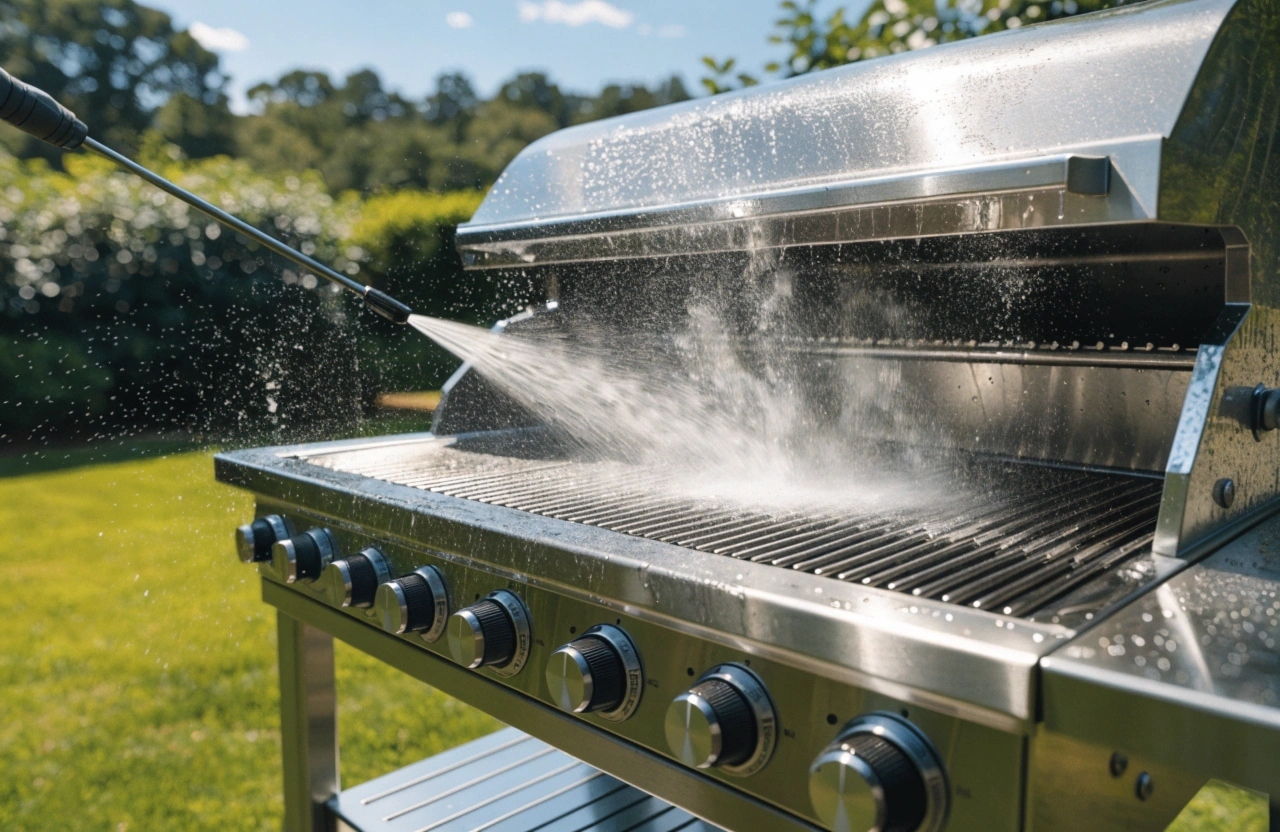
The reason this distinction matters on a BBQ specifically is that the cooking surface is in direct contact with food. There’s no packaging. No buffer. What lives on that surface transfers straight onto your steak, your sausages, your kids’ food. A professional BBQ sanitising service in Newcastle addresses all three stages — not just the one you can see.

What's Actually Living Inside a Neglected BBQ
This is the section most people would rather skip. But if you’re serious about food safety for your family, it’s worth knowing what a BBQ that hasn’t been properly sanitised is actually harbouring.
Grease Traps and Drip Trays
The grease trap and drip tray are the most neglected components on any BBQ. Warm, fatty, and often sitting in stagnant moisture — they’re near-perfect conditions for bacterial growth. Salmonella, E. coli, and Listeria are all capable of colonising accumulated grease residue. These aren’t abstract risks. They’re pathogens that cause serious foodborne illness, particularly in young children and older family members.
Under the Cooking Plates
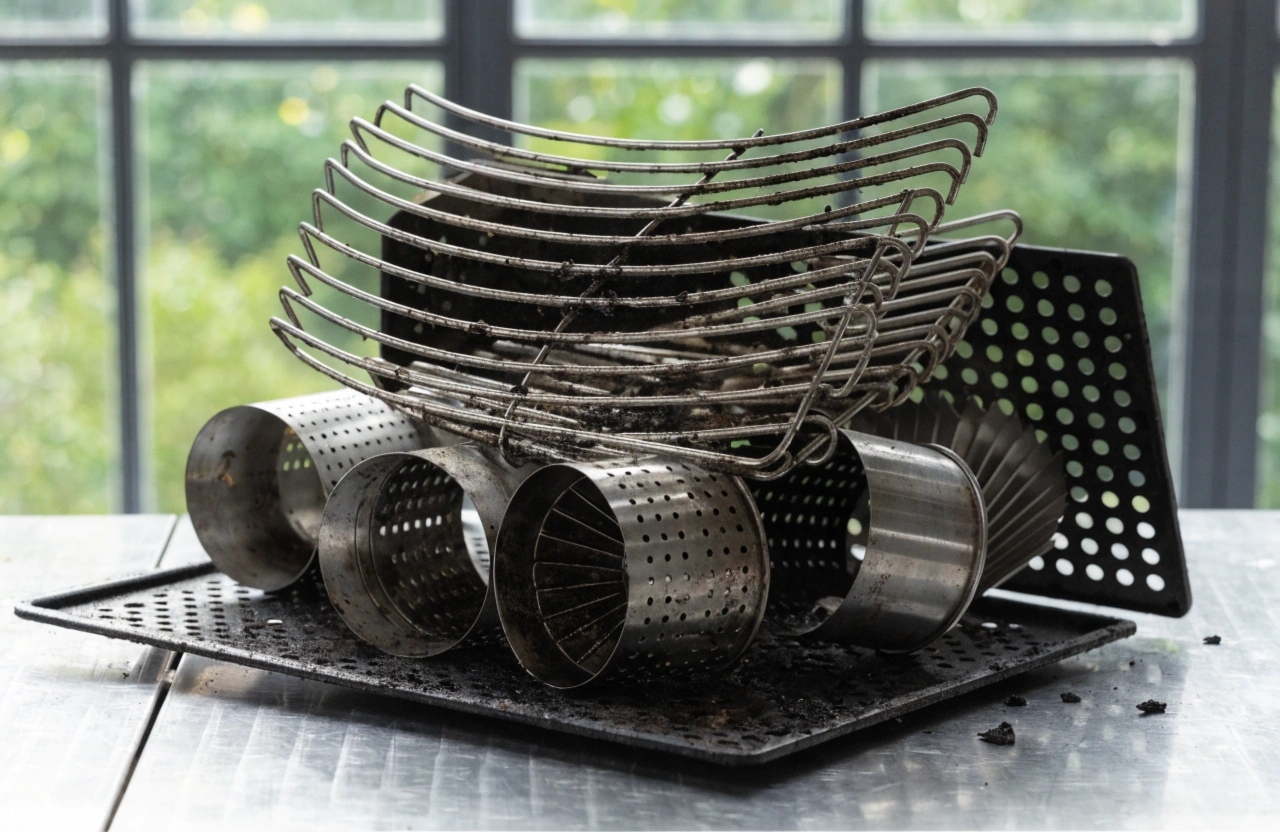
Underneath removable cooking plates and flame tamers, carbonised grease and food particles accumulate in layers. This material doesn’t just affect flavour — it provides a stable environment for bacteria to persist between uses, even when the BBQ has been heated.
Inside the Hood and Grease Channels
Newcastle’s coastal humidity creates a specific problem that drier climates don’t face to the same degree. Moisture gets trapped inside BBQ hoods and grease channels during periods of non-use, particularly through autumn and winter. That moisture, combined with organic residue, creates ideal conditions for mould development. Mould spores inside a BBQ hood become airborne during cooking — and land directly on the food below.
A visual inspection won’t reveal most of this. That’s precisely why professional BBQ sanitising in Newcastle exists — to address what a standard clean simply doesn’t reach.
The Hidden Risk — When a Clean BBQ Isn't Actually Safe
There’s a reason this catches people off guard. You’ve run the BBQ on high heat. You’ve brushed the grates. The surface looks clean — no visible debris, no obvious residue. It passes the eye test. So it must be fine, right?
Not necessarily.
Heat alone doesn’t sanitise a BBQ cooking surface. Standard cooking temperatures can reduce some bacterial loads, but they don’t eliminate everything — particularly in the colder components of the BBQ like drip trays, grease channels, and the underside of hood panels that don’t reach the same temperature as the cooking surface itself. Bacteria like Listeria monocytogenes are specifically known for their ability to survive conditions that would eliminate less resilient pathogens.
The visual appearance of a cooking surface also tells you very little about its microbial status. A grate can look spotless and still carry a bacterial film that transferred from contaminated grease elsewhere in the unit during the last cook.
Who Carries the Most Risk
This matters more in some households than others. If you’re regularly cooking for young children, elderly family members, pregnant women, or anyone with a compromised immune system — the stakes around food surface hygiene are genuinely higher. These groups are significantly more vulnerable to foodborne illness, and the consequences of contamination are more serious.
For Newcastle families who host regularly — and most do — the frequency of that risk exposure compounds over a season. Professional BBQ sanitising and disinfection removes that variable entirely, giving you a surface you can actually cook on with confidence.

What a Professional BBQ Sanitising Service Actually Involves
A lot of people assume a professional BBQ clean is just a more thorough version of what they’d do themselves. The sanitising and disinfection component is where that assumption breaks down.
The Process
A professional BBQ sanitising service in Newcastle works through the unit systematically — not just the cooking surface, but every component that comes into contact with food, grease, or moisture.
Component disassembly comes first. Cooking grates, flame tamers, drip trays, grease trays, and burner covers are all removed individually so each one can be treated properly rather than cleaned around.
Degreasing and cleaning removes the bulk material — carbonised buildup, accumulated grease, and food residue — so that the sanitising agents that follow can make direct contact with the surface itself. Sanitisers applied over grease layers don’t work. Sequence matters.
Food-safe disinfectant application follows, using agents that are specifically approved for food contact surfaces. These aren’t household spray products. They’re formulated to eliminate bacterial and mould contamination at concentrations that actually achieve disinfection — and they’re safe to cook on once dry.
High-temperature treatment on applicable surfaces assists with decontamination of components that can withstand direct heat application.
Full reassembly and inspection closes the service — every component goes back correctly, with burner function checked before the job is signed off.
The result isn’t a BBQ that looks clean. It’s a BBQ that’s been genuinely decontaminated from the components up — ready for your next cook with confidence.
Peace of Mind Before the People Arrive
There’s a particular kind of stress that comes with hosting a large backyard gathering. The food prep, the drinks, the seating, the timing — it all stacks up. The last thing you want sitting in the back of your mind while you’re cooking for twenty people is a quiet uncertainty about whether the grill you’re using is actually safe.
That’s not an exaggerated concern. It’s a practical one — and it’s one that a professional BBQ sanitising service resolves completely before the day arrives.
Before Big Gatherings and Holiday Entertaining
Newcastle families host hard. Christmas afternoon in the backyard. Australia Day with the neighbours. NRL finals with half the street over. These are the moments a dirty or contaminated BBQ creates real risk — not just for the food, but for the people you’ve invited into your home. A professionally sanitised BBQ going into these events means you’re cooking with complete confidence, not quiet hope.
After a Long Period of Non-Use
If your BBQ has been sitting largely unused through autumn and winter — covered, maybe, but not treated — it’s not in the same condition it was when you last used it properly. Mould, moisture, and bacterial development don’t wait for you to notice them. A sanitising service before that first spring cook brings the unit back to genuinely food-safe condition, not just operational condition.
The Simple Truth
You wouldn’t serve food off an unsanitary kitchen bench and call it fine because it looked clean. Your BBQ cooking surface deserves exactly the same standard — and your family deserves the certainty that it meets it.
How Often Should You Get Your BBQ Professionally Sanitised
Regular cleaning and professional sanitising are two different schedules. Most Newcastle homeowners who do clean their BBQ do so reasonably regularly during the entertaining season — a brush down after each use, a more thorough clean every month or two. That’s a good habit. But it’s not a substitute for a full sanitising and disinfection service.
As a general guide:
| Situation | Recommended Sanitising Frequency |
| Regular family use, moderate entertaining | Once per year — ideally pre-summer |
| Heavy use, frequent large gatherings | Twice per year — pre-summer and mid-season |
| After extended non-use (winter storage) | Before first use of the new season |
| Before hosting a large event | Ahead of the event, regardless of last clean date |
| After a known contamination incident | Immediately |
| Households with young children or vulnerable members | At minimum annually — consider twice yearly |
The Newcastle Seasonal Consideration
Newcastle’s entertaining season runs longer than most Australian cities. The mild winters mean BBQs don’t get packed away the way they do further south — but they do get used less frequently between April and August. That reduced-use period, combined with coastal humidity, is exactly when mould development inside hoods and grease channels accelerates.
Coming into spring, before the September–October entertaining surge kicks in across suburbs like New Lambton, Charlestown, and Wallsend, is the single most valuable time to book a professional BBQ sanitising service. You’re starting the season on a genuinely clean slate — not just a visually acceptable one.
Frequently Asked Questions — BBQ Sanitising & Disinfection Newcastle
Yes — significantly. A standard clean removes visible grease, carbon, and food debris. Sanitising and disinfection goes further, targeting bacteria, mould spores, and pathogens that a visual clean doesn’t address. The products used, the process sequence, and the outcome are all different. If food safety is the goal, sanitising is the service you need.
Every product used in a professional BBQ sanitising service is specifically formulated for food contact surfaces. They’re not household cleaning products. Once applied correctly and allowed to dry, they leave no harmful residue — the surface is safe to cook on immediately after service.
Visual cleanliness and microbial safety aren’t the same thing. Bacteria and mould colonies aren’t visible to the naked eye. A BBQ can pass a visual inspection and still carry contamination in grease channels, drip trays, and under cooking plates that only a proper sanitising treatment will eliminate.
Most residential BBQ sanitising services in Newcastle are completed within one to two hours depending on the size of the unit and the degree of buildup present.
Absolutely — and that’s one of the most common reasons Newcastle homeowners book. Scheduling ahead of a Christmas gathering, birthday party, or Australia Day event is completely standard. Book with enough lead time to ensure availability during the busy summer season.
Yes. Built-in BBQs and outdoor kitchen setups are serviced using the same systematic component process as freestanding units.
