
What Outdoor BBQ Cleaning Actually Covers
When most people think about cleaning their BBQ, they picture wiping down the grates and maybe giving the outside a once-over with a damp cloth. That’s maintenance. What we do is a full professional clean — and the difference is significant.
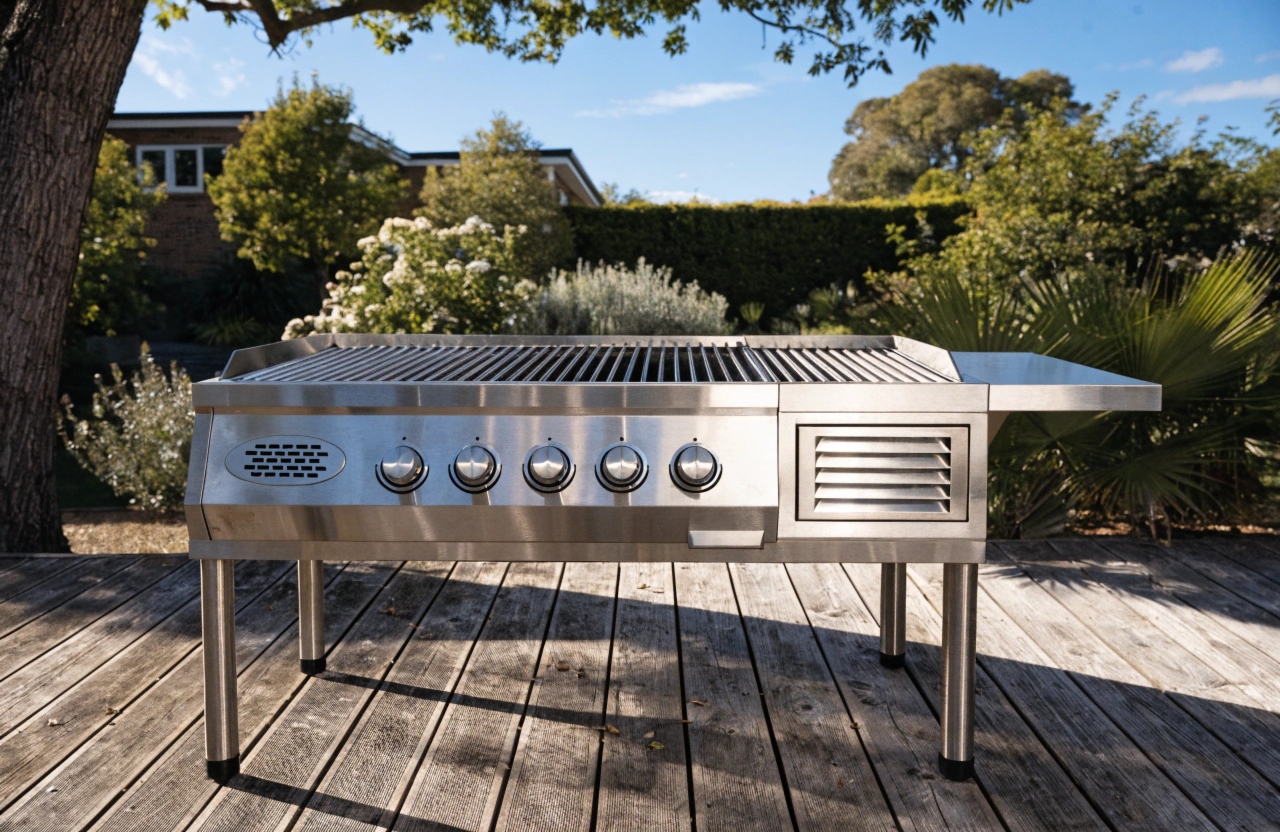
Outdoor BBQ cleaning covers every component of your unit, inside and out. That means the cooking surfaces and grill grates, the burner tubes and burner caps, the grease tray and grease collection system, the hood interior, the firebox walls, the side shelves, and the external casing. Every part that accumulates grease, carbon, and debris gets stripped back and properly cleaned.
We work across all types of outdoor BBQ units:
• Gas BBQs — 2, 4, and 6-burner freestanding units from brands like Weber, Beefeater, Ziegler & Brown, and Matador
• Built-in outdoor kitchen BBQs — fixed units set into alfresco benchtops and outdoor kitchen cabinetry
• Charcoal BBQs — kettle-style and barrel units where carbon and ash buildup runs deep
• Portable and camping BBQs — compact units that often get the least attention but accumulate grease just as fast
• Flat-top and griddle-style BBQs — increasingly popular in Newcastle backyards; require specialist cleaning to restore the cooking surface
No matter what you’re working with, the process is thorough, methodical, and done on-site at your property — so you’re not left without your BBQ for days on end.

Why Newcastle’s Environment Is Harder on Outdoor BBQs Than You Think
Newcastle is a brilliant place to own an outdoor BBQ. The climate is temperate, the lifestyle is built around backyard entertaining, and you can realistically fire up the grill most weekends from August through to May — sometimes year-round. But that same environment that makes outdoor cooking so enjoyable here is also working against your equipment in ways that aren’t always obvious until the damage is done.
Salt Air Corrosion
Suburbs within a few kilometres of the coast — Merewether, Bar Beach, Cooks Hill, Redhead — sit in a salt air corridor that accelerates rust formation on cast iron grates, steel burner components, and external casing. BBQs left outdoors in these areas deteriorate noticeably faster than identical units kept further inland. Even a quality cover doesn’t fully stop it.
Humidity and Grease Hardening
Newcastle’s humid summers create the perfect conditions for grease deposits to harden into a thick, cement-like layer inside the firebox and on burner surfaces. Once grease reaches that stage, a wire brush and a bottle of spray cleaner won’t shift it. It needs professional-grade degreasers and the right tools to remove it properly.
UV Exposure and Year-Round Use
With 160-plus days of sunshine annually, external surfaces cop significant UV degradation. Combined with the fact that Newcastle BBQs are in active use for more months per year than most Australian cities, the cumulative buildup between cleans is considerably heavier than people expect.
The Areas That Accumulate the Worst Buildup
Every part of an outdoor BBQ collects grime over time, but there are a handful of areas where the buildup gets genuinely serious — and most of them are out of sight, which is exactly why they get ignored.
Cooking grates and surfaces are the most visible area, but also the most used. Carbon deposits bake onto grate surfaces with every cook. Over time that layer gets thick enough to flake directly onto food — which is as unpleasant as it sounds.
Burner tubes and caps are where blocked ports cause uneven heat and flare-ups. Grease, debris, and spider webs — yes, spiders love burner tubes — clog the ports and disrupt gas flow. A professional clean restores full, even flame across every burner.
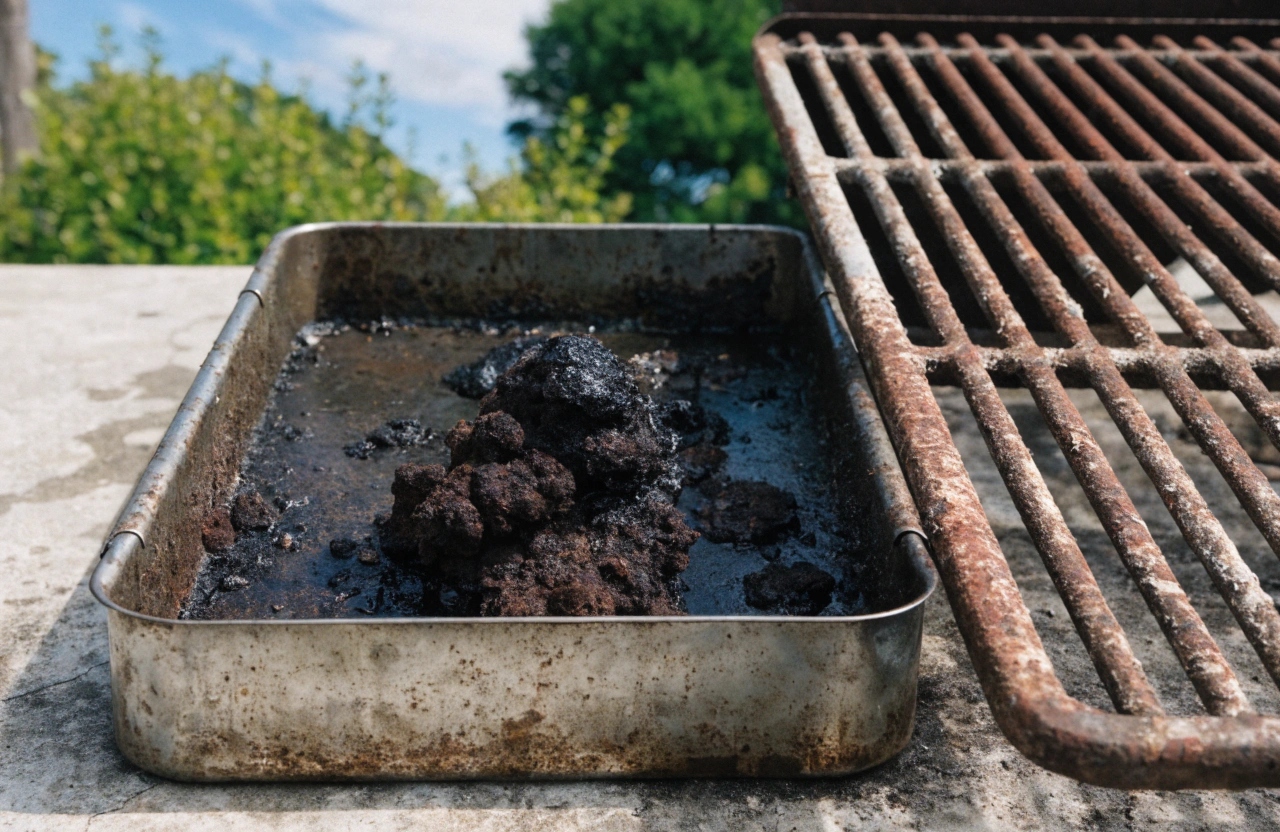
The grease tray and collection system is the most neglected component on almost every BBQ we see. It sits underneath the cooking area collecting rendered fat, drippings, and food debris. Left uncleaned, it becomes a breeding ground for bacteria and mould — and in serious cases, a fire hazard when grease overflows onto the burner area.
The hood interior traps smoke residue, vaporised grease, and carbon in a layer that builds up thick over repeated cooks. It also radiates heat back onto food during cooking — a contaminated hood interior affects flavour noticeably.
The external casing takes a beating from salt air, UV exposure, and grease splatter, leaving the surface looking tired and dull. A proper external clean and treat makes a real difference to both appearance and long-term surface condition.
The Health Risks of Cooking on a Neglected Outdoor BBQ
This is the part most BBQ owners haven’t thought about — and once you do, it’s hard to un-think it.
A neglected outdoor BBQ isn’t just an eyesore. It’s an active hygiene problem. The same warm, greasy environment that makes a BBQ great for cooking is also ideal for bacteria and mould to take hold between uses. In Newcastle’s humid summers, that process happens faster than you’d expect.
Bacteria growth in grease traps is one of the more serious concerns. Old grease sitting in an uncleaned tray at ambient temperature — particularly through a warm Newcastle summer — creates conditions where harmful bacteria can multiply. That grease doesn’t stay in the tray. It vaporises during cooking and circulates around your food.
Mould in grease trays and hood interiors is more common than most people realise, especially on BBQs that have sat unused through winter or been stored with residual food debris inside. Mould spores don’t disappear when you fire the burners up — they get driven upward into the cooking environment.
Carbon flaking onto food happens when thick carbon deposits on grate surfaces break apart during cooking. Carbon buildup at this level isn’t just a flavour issue — regularly ingesting flaked carbon residue from a heavily contaminated cooking surface isn’t something you want to make a habit of, particularly if you’re cooking for kids.
A professionally cleaned BBQ removes all of this. Food-safe cleaning products, thorough sanitisation of every surface, and a grease tray that actually drains cleanly — it’s a straightforward fix to a problem most people don’t know they have.
Professional Cleaning vs. Hosing It Down Yourself
There’s nothing wrong with giving your BBQ a regular wipe-down between cooks. That kind of routine maintenance is good habit. But there’s a real difference between surface maintenance and a proper professional clean — and it’s worth being honest about what a garden hose and a wire brush actually achieve.
What a DIY clean typically covers is the visible stuff. Grates get scraped, the exterior gets wiped, maybe the grease tray gets emptied if it’s looking full. That removes the top layer of fresh residue and keeps things presentable. It doesn’t touch the hardened carbon baked into the firebox walls, the grease that’s polymerised onto the hood interior, the blocked burner ports, or the oxidisation building up on external surfaces.
What a professional clean covers is every component, inside and out. We use professional-grade degreasers that break down hardened grease deposits that household sprays simply can’t shift. Burner tubes get cleared and inspected. The grease collection system gets fully stripped and sanitised. Hood interiors get degreased back to bare surface. External casing gets treated to slow further deterioration.
The practical difference shows up in two ways — how your BBQ performs and how long it lasts. Burners that have been properly cleared run evenly and efficiently. Cooking surfaces that have been stripped back to clean metal hold heat properly and don’t contaminate food. And a BBQ that gets professionally cleaned on a regular schedule simply lasts years longer than one that only ever gets a quick hose-down between Saturday afternoon sessions.

How a Regular Cleaning Schedule Extends Your BBQ’s Working Life
A quality outdoor BBQ is a genuine investment. A decent four-burner gas unit runs anywhere from $800 to $2,500. A built-in outdoor kitchen setup can push well beyond that. Most Newcastle homeowners who’ve spent that kind of money on their outdoor entertaining setup want it to last — and the single biggest factor in how long any outdoor BBQ lasts is how consistently it gets properly cleaned.
Grease and carbon buildup don’t just affect hygiene and performance. They actively accelerate the deterioration of every component they touch. Burner tubes corrode faster when they’re coated in residue. Fireboxes develop rust more readily when grease sits against the steel surface long-term. Grease trays crack and warp when they run perpetually full. These are all replaceable parts — but replacement costs add up quickly, and some components aren’t easy to source for older units.
For most Newcastle households, a professional clean once or twice a year is the right cadence — once heading into the main entertaining season in spring, and once at the end of summer when the heaviest use period wraps up. Households that entertain frequently or cook on their BBQ multiple times per week will benefit from more regular attention.
For built-in outdoor kitchens with multiple cooking surfaces and rangehood components, a scheduled quarterly service makes practical sense given the complexity and value of the installation.
The return on a professional clean isn’t hard to calculate. A $150 clean that adds three to five years to the life of a $1,500 BBQ is straightforward value — and that’s before you factor in the performance and hygiene benefits every time you cook.
Frequently Asked Questions
For most households, once or twice a year is the sweet spot — once in spring before the main entertaining season kicks off, and once after summer when the heaviest use period is done. If you’re cooking on your BBQ multiple times a week or you live close to the coast where salt air is a factor, more frequent cleans will keep your unit in better shape between services.
Most standard freestanding gas BBQs take between 60 and 90 minutes to clean properly on-site. Built-in outdoor kitchen setups or units with significant neglect buildup will take longer. We’ll give you a realistic time estimate when you book.
Not much. Make sure the gas is turned off at the bottle and the unit has had time to cool down completely if it’s been used recently. That’s about it — we take care of everything else.
No. We use professional-grade degreasers and food-safe cleaning products that are appropriate for all BBQ surfaces including cast iron grates, stainless steel components, porcelain-coated surfaces, and external casing. We don’t use anything that would damage seals, burner components, or protective coatings.
Rarely. Even heavily neglected units with significant carbon and grease buildup can be restored to a safe, properly functioning condition in most cases. We’ll let you know upfront if any components are beyond cleaning and need replacement.
Yes. We clean all freestanding gas BBQs, built-in outdoor kitchen units, charcoal BBQs, portable BBQs, and flat-top griddle-style units regardless of brand — Weber, Beefeater, Ziegler & Brown, Matador, BeefEater Signature, and everything in between.